1
Models
Container Street
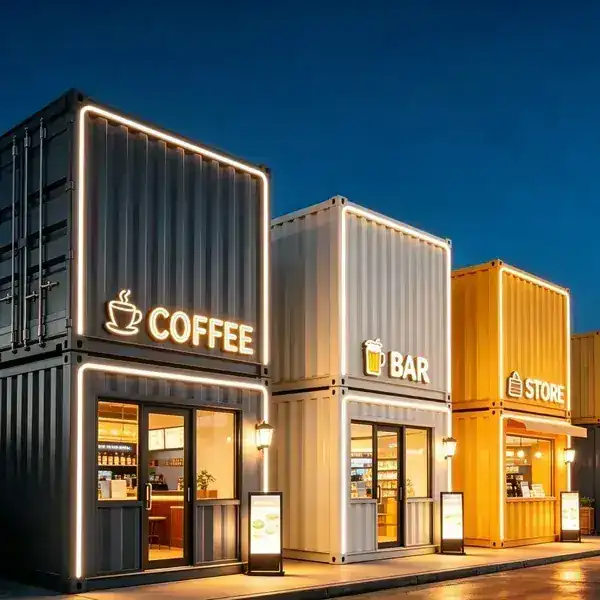
Modular splicing, fast installation. For shops, milk tea stores and cultural blocks.
Explore Models
Fully customizable — from dimensions to materials and finishes.
What Is Container Street?
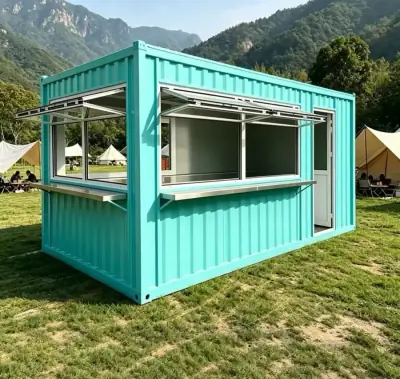
Container Street is a modular system that links multiple container units into a cohesive commercial development — from a single shop to an entire shopping street. Standardized connections let you splice units side by side, back to back, or into courtyards, while keeping every storefront brandable and relocatable.
It turns vacant land into operating retail in weeks, making it popular for milk-tea stores, cafes, boutiques, cultural blocks, and outdoor markets.
Key Advantages
- Modular splicing — unlimited layout combinations from one unit upward.
- Fast installation — operational in weeks, not months.
- Customizable storefronts — signage, colors, and facades per tenant.
- Weather-resistant — built for outdoor commercial use.
- Relocatable and expandable — grow or move the whole street as needed.
Typical Applications
- Retail shops — boutiques, milk-tea stores, cafes.
- Cultural blocks — art districts and creative hubs.
- Food courts — container restaurants and stalls.
- Outdoor markets — organized modular market spaces.
- Event venues — temporary or permanent commercial installations.
Build, Shipping & Installation
Units are prefabricated and shipped to site, then spliced on foundations using the standardized connection system. Fit-out happens per tenant, so a phased opening is easy — open the first shops while others are still being finished.
FAQ
How long does it take to build a container street?
A typical commercial block becomes operational in weeks rather than months, with units spliced on site and fitted out per tenant.
Can container street units be rearranged later?
Yes. The modular connection system lets you add, remove, or reposition units, so the street can expand or relocate as the project evolves.
Are the storefronts customizable?
Absolutely. Each unit supports custom signage, colors, and facade treatments so every tenant gets a distinct brand presence.
Is container street suitable for food and beverage?
Yes. Units are used for milk-tea stores, cafes, and container restaurants, with options for exhaust, water, and power routing per use.
Can container street be used for temporary events?
It works equally well for temporary markets and permanent developments — the same units relocate between events or seasons.