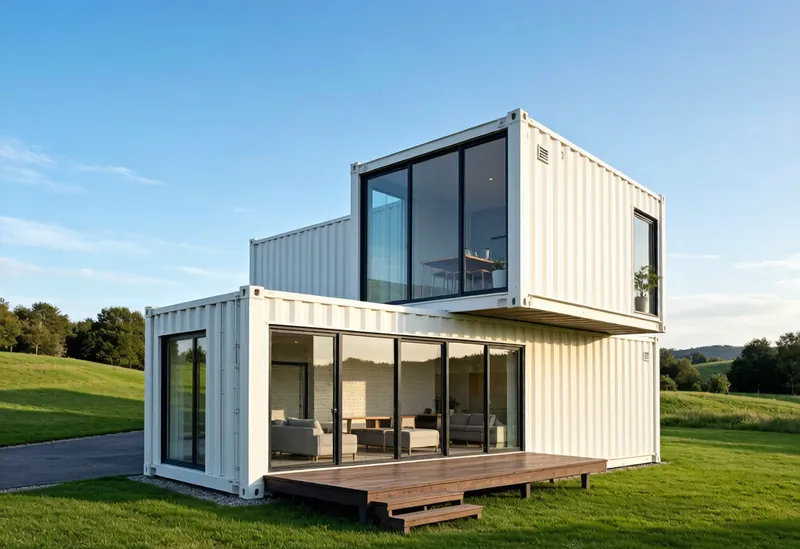
Quick Answer: How to Buy a Container House (Step by Step)
To buy a container house: (1) define your use — home, office, site camp, or resort; (2) pick a model — flat pack ($1,500–$3,500), expandable ($2,500–$6,000), or folding ($2,000–$4,000) FOB China; (3) get itemized quotes from at least 3 ISO 9001 factories covering unit price, customization, shipping, and lead time; (4) verify certifications and inspections; (5) arrange freight and customs; (6) assemble on a prepared foundation. Factory-direct from China saves 40–60% versus local fabrication.
Introduction
Buying a container house is a significant investment that requires careful planning. This guide walks you through the entire process from initial research to final installation, helping you avoid common mistakes and get the best value for your money.
Step 1: Determine Your Requirements
Define Your Project Purpose
Before comparing prices, clarify exactly what you need:
| Purpose | Recommended Type | Key Considerations |
|---|---|---|
| Worker Accommodation | Flat Pack | Cost efficiency, durability, easy maintenance |
| Site Office | Flat Pack / Expandable | Professional appearance, meeting space |
| Mining Camp | Flat Pack | Bulk ordering, quick assembly, stackable |
| Resort / Glamping | Space Capsule / Expandable | Design, comfort, guest experience |
| Emergency Housing | Folding | Speed of deployment, portability |
| Permanent Home | Expandable | Space, comfort, customization |
| Retail / Commercial | Creative / Expandable | Visibility, customer flow, branding |
Location and Climate Factors
Your location significantly impacts the type and specifications needed:
Tropical Climate (Southeast Asia, Africa)
- Standard 50mm insulation sufficient
- Focus on ventilation and moisture resistance
- Consider elevated foundations for flooding
Desert Climate (Middle East, Australia)
- Upgrade to 75mm PU insulation
- UV-resistant exterior coating
- Enhanced air conditioning provisions
Cold Climate (Russia, Northern Europe)
- 75mm or 100mm insulation required
- Double-glazed windows
- Heating system integration
Coastal Climate
- Anti-corrosion treatment essential
- Stainless steel fasteners
- Elevated foundations for storm surge
Quantity Planning
| Project Size | Units | Lead Time | Price Benefit |
|---|---|---|---|
| Small (1-10) | 1-10 | 15-20 days | Standard pricing |
| Medium (11-50) | 11-50 | 20-30 days | 5-10% discount |
| Large (51-200) | 51-200 | 30-45 days | 10-15% discount |
| Bulk (200+) | 200+ | 45-60 days | 15-20% discount |
Step 2: Choose the Right Container House Type
Flat Pack Container House
Best For: Budget-conscious projects, worker camps, site offices
Advantages:
- Lowest cost per square meter
- 75% shipping cost savings
- Stackable up to 3 floors
- High customization flexibility
- 15-20 year lifespan
Starting Price: $800-$2,500 for 20ft
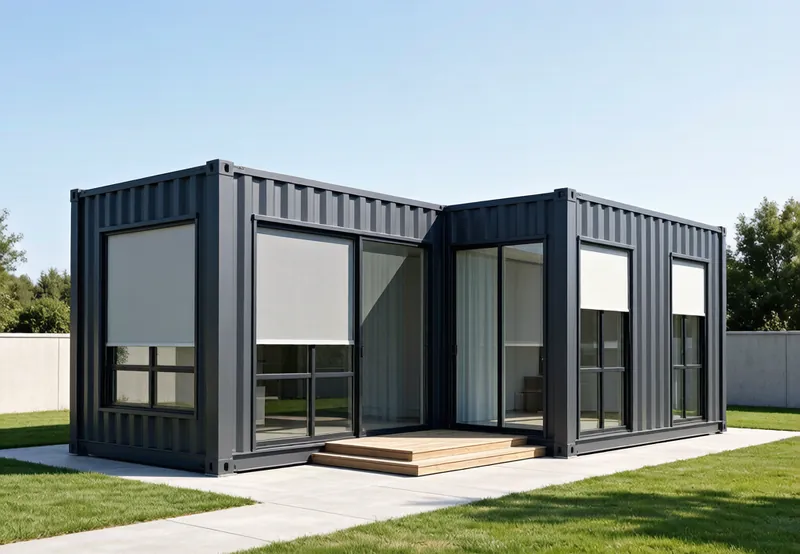
Expandable Container House
Best For: Resorts, offices, permanent homes
Advantages:
- Largest interior space after expansion
- French windows for natural light
- Optional terrace/balcony
- Modern design aesthetic
Starting Price: $2,500-$6,000 for 20ft
Folding Container House
Best For: Emergency housing, temporary events
Advantages:
- Fastest deployment (15 minutes)
- Minimal site preparation
- Reusable and relocatable
Starting Price: $1,500-$4,000 for 20ft
Space Capsule Container House
Best For: Luxury resorts, high-end hospitality
Advantages:
- Premium futuristic design
- Panoramic curved windows
- Smart home integration
- 20+ year lifespan
Starting Price: $4,000-$15,000
Step 3: Calculate Total Project Budget
Cost Breakdown Template
| Cost Component | Estimated Range | Notes |
|---|---|---|
| Unit Cost | $800-$15,000 | Depends on type and size |
| Customization | +15-30% | Insulation, plumbing, interior |
| Shipping | $200-$3,500/unit | Depends on destination |
| Foundation | $500-$2,000/unit | Concrete pad or ground screws |
| Installation | $200-$500/unit | Labor and equipment |
| Utilities | $300-$1,000/unit | Electrical, plumbing connections |
| Permits | $200-$1,000 | Local building permits |
| Contingency | +10% | Unexpected costs |
Example: 20-Unit Mining Camp
| Component | Flat Pack | Expandable |
|---|---|---|
| Units (20x) | $16,000-50,000 | $50,000-120,000 |
| Shipping | $4,000-8,000 | $8,000-15,000 |
| Foundation | $2,000-5,000 | $3,000-6,000 |
| Installation | $2,000-4,000 | $3,000-6,000 |
| Total | $24,000-67,000 | $64,000-147,000 |
Step 4: Research and Select Suppliers
Supplier Evaluation Checklist
Production Capability
- Factory size (minimum 5,000 m² recommended)
- Daily production capacity
- Quality control process
- Raw material sourcing
Certifications and Standards
- ISO 9001 Quality Management
- ISO 14001 Environmental Management
- CE Certification (for Europe)
- AS Standards (for Australia)
- SBC Compliance (for Saudi Arabia)
Export Experience
- Years in business (minimum 3 years)
- Countries served
- Export documentation capability
- After-sales support
Customer References
- Request customer testimonials
- Check online reviews
- Ask for project case studies
- Contact previous customers
Red Flags to Avoid
❌ No factory address or photos ❌ Unwilling to provide references ❌ Prices significantly below market ❌ No certifications or standards ❌ Pressure to pay 100% upfront ❌ No written warranty terms
Step 5: Request and Compare Quotations
What to Include in Your RFQ
Send this information to get accurate quotes:
-
Project Details
- Purpose and application
- Number of units needed
- Preferred container house type
- Required dimensions
-
Specifications
- Insulation requirements
- Window and door preferences
- Electrical and plumbing needs
- Interior finish level
-
Logistics
- Delivery location (port or address)
- Required delivery date
- Any site access restrictions
-
Customization
- Color preferences
- Layout modifications
- Special features needed
Comparing Quotations
Create a comparison table:
| Criteria | Supplier A | Supplier B | Supplier C |
|---|---|---|---|
| Unit Price | $ | $ | $ |
| MOQ | |||
| Lead Time | |||
| Certifications | |||
| Warranty | |||
| Shipping Cost | $ | $ | $ |
| Total Cost | $ | $ | $ |
Step 6: Verify Quality Standards
Material Quality Checklist
Steel Frame
- Q355 galvanized steel (minimum)
- 2.0mm+ thickness for columns
- Hot-dip galvanized coating
- Welding quality inspection
Wall Panels
- PU (polyurethane) insulation (preferred)
- 50mm minimum thickness
- Fire rating B1 or better
- Density: 40+ kg/m³
Roof System
- Standing seam or sandwich panel
- Waterproof membrane
- Proper drainage slope
- Insulation matching walls
Windows and Doors
- Double-glazed (minimum)
- Aluminum or uPVC frames
- Security locks
- Weather sealing
Request These Documents
- Structural calculations - Engineering analysis
- Material certificates - Steel, insulation, glass
- Fire test reports - Compliance certificates
- Load test results - Structural integrity proof
- Warranty terms - Written guarantee
Step 7: Place Order and Manage Production
Order Process Timeline
| Stage | Duration | Your Action |
|---|---|---|
| Quotation | 1-3 days | Review and negotiate |
| Order Confirmation | 1-2 days | Sign contract, pay deposit |
| Design Finalization | 3-5 days | Approve drawings |
| Production | 15-30 days | Monitor progress |
| Quality Inspection | 1-2 days | Third-party inspection |
| Balance Payment | 1 day | Pay remaining balance |
| Shipping Preparation | 2-3 days | Packing and loading |
Payment Terms (Typical)
| Milestone | Percentage | When |
|---|---|---|
| Deposit | 30-50% | Order confirmation |
| Production Progress | 0-30% | During manufacturing |
| Balance | 20-40% | Before shipping |
Tip: Never pay 100% upfront. Use secure payment methods (T/T, L/C) and keep records.
Step 8: Arrange Shipping and Logistics
Shipping Options
| Method | Best For | Cost | Transit Time |
|---|---|---|---|
| FCL (Full Container) | 6+ units | Lower per unit | 15-35 days |
| LCL (Less than Container) | 1-5 units | Higher per unit | 20-45 days |
| Bulk Cargo | 50+ units | Lowest per unit | 25-40 days |
Documentation Required
- Commercial Invoice
- Packing List
- Bill of Lading
- Certificate of Origin
- Inspection Certificate
- Insurance Certificate
Customs and Import
Before shipping:
- Check import regulations in your country
- Calculate import duties and taxes
- Arrange customs broker if needed
- Prepare import permits
Step 9: Prepare Installation Site
Foundation Requirements
| Foundation Type | Best For | Cost | Preparation Time |
|---|---|---|---|
| Concrete Pad | Permanent | $500-2,000 | 3-7 days |
| Ground Screws | Temporary | $200-500 | 1-2 days |
| Gravel Base | Semi-permanent | $100-300 | 1-2 days |
| Steel Frame | Elevated | $300-800 | 2-3 days |
Site Preparation Checklist
- Level the ground (±20mm tolerance)
- Prepare utility connections (water, electricity, sewage)
- Ensure access for delivery truck (minimum 3.5m width)
- Arrange crane if stacking units
- Clear area around installation site
Step 10: Installation and Handover
Installation Process (Flat Pack)
| Step | Duration | Workers | Tools Needed |
|---|---|---|---|
| 1. Foundation check | 30 min | 2 | Level, measuring tape |
| 2. Base frame assembly | 1 hour | 3 | Wrenches, bolts |
| 3. Corner post installation | 30 min | 3 | Wrenches |
| 4. Wall panel installation | 1 hour | 3 | Wrenches, sealant |
| 5. Roof installation | 45 min | 3 | Wrenches, ladder |
| 6. Door and window installation | 30 min | 2 | Screwdrivers |
| 7. Electrical connection | 1 hour | 1 electrician | Electrical tools |
| 8. Interior finishing | 1 hour | 2 | Basic tools |
| Total | 4-5 hours | 3-4 workers |
Handover Checklist
- Visual inspection of all components
- Test all doors and windows
- Check electrical system
- Verify plumbing connections
- Document any defects
- Receive warranty documents
- Get maintenance guide
Common Mistakes to Avoid
❌ Mistake 1: Choosing Based on Price Alone
Problem: Lowest price often means lowest quality Solution: Compare total value including quality, warranty, and support
❌ Mistake 2: Ignoring Shipping Costs
Problem: Shipping can add 20-40% to unit cost Solution: Get shipping quotes before finalizing budget
❌ Mistake 3: Skipping Quality Inspection
Problem: Defects discovered after delivery are costly to fix Solution: Arrange third-party inspection before shipping
❌ Mistake 4: Not Checking Local Regulations
Problem: Building codes vary by location Solution: Verify compliance with local authorities before ordering
❌ Mistake 5: Overlooking Maintenance
Problem: Shortened lifespan without proper care Solution: Follow manufacturer’s maintenance guide
FAQ
What is the best container house type for first-time buyers?
For first-time buyers, flat pack container houses are generally the best choice. They offer the lowest cost per square meter ($800–$2,500 for a 20ft unit), ship 75% cheaper than pre-assembled units, assemble in 2–4 hours with basic tools, and are available in the widest range of configurations. This makes them ideal for testing the concept before committing to larger investments.
How much does it cost to buy and ship a container house from China?
Total cost varies by type and destination. A 20ft flat pack container house costs $800–$2,500 ex-factory, plus $200–$1,500 shipping depending on destination. Add $500–$2,000 for foundation, $200–$500 for installation, and $200–$1,000 for permits. For a complete 20-unit mining camp, budget $24,000–$67,000 for flat pack units delivered and installed.
How long does it take to receive a container house after placing an order?
From order confirmation to on-site installation typically takes 6–10 weeks: 2–4 weeks for production, 2–4 weeks for ocean shipping, and 1–2 weeks for site preparation and installation. Site preparation can run in parallel with production and shipping to compress the overall timeline.
Do I need a building permit for a container house?
Permit requirements vary by location and intended use. Most jurisdictions require permits for permanent container homes, while temporary structures (site offices, worker camps) often have simplified permit processes. Always check with your local building authority before ordering to avoid compliance issues.
Can container houses be customized for different climates?
Yes, container houses can be customized for any climate. For tropical regions, standard 50mm insulation with ventilation features is sufficient. Desert climates benefit from 75mm PU insulation and UV-resistant coatings. Cold climates require 75–100mm insulation, double-glazed windows, and heating system integration. Coastal locations need anti-corrosion treatment and stainless steel fasteners.
What warranty do container house manufacturers typically offer?
Standard warranties include 10–15 years on the structural frame, 2–5 years on components (doors, windows, electrical), and 1–2 years on workmanship. Always request written warranty terms before placing an order, and clarify what is covered versus excluded, especially for shipping damage and wear items.
What should I check before buying a container house?
Confirm the use, set a landed (not just factory) budget, pick the right type (flat pack, expandable, folding, capsule), verify local permits and standards, audit the supplier (ISO 9001, factory area, past projects), and get an itemized quote. The full checklist is in this buying guide and the complete container house guide.
What are container houses used for?
Container houses serve homes, offices, retail kiosks, cafes, saunas, glamping, disaster relief, and worker camps. The complete guide covers each use and the right type for it.
Frequently Asked Questions
How long does the entire process take?
From order to installation: 6-10 weeks typically
- Production: 2-4 weeks
- Shipping: 2-4 weeks
- Site preparation: 1-2 weeks
- Installation: 1-2 days
What warranty is standard?
Most manufacturers offer:
- Structure: 10-15 years
- Components: 2-5 years
- Workmanship: 1-2 years
Can I visit the factory?
Yes, reputable manufacturers welcome factory visits. If you cannot visit in person, request a live video tour.
What if I need modifications after delivery?
Most changes are possible but may require additional materials and labor. Discuss modification options before ordering.
Conclusion
Buying a container house requires careful planning and research. By following this guide, you can avoid common pitfalls and ensure your project is successful. Remember to:
- Define your requirements clearly
- Choose the right container house type
- Calculate total project cost
- Select a reliable supplier
- Verify quality standards
- Plan logistics carefully
- Prepare your site properly
Ready to start your container house project? Contact EasiHive today for a free consultation and custom quote tailored to your specific needs.