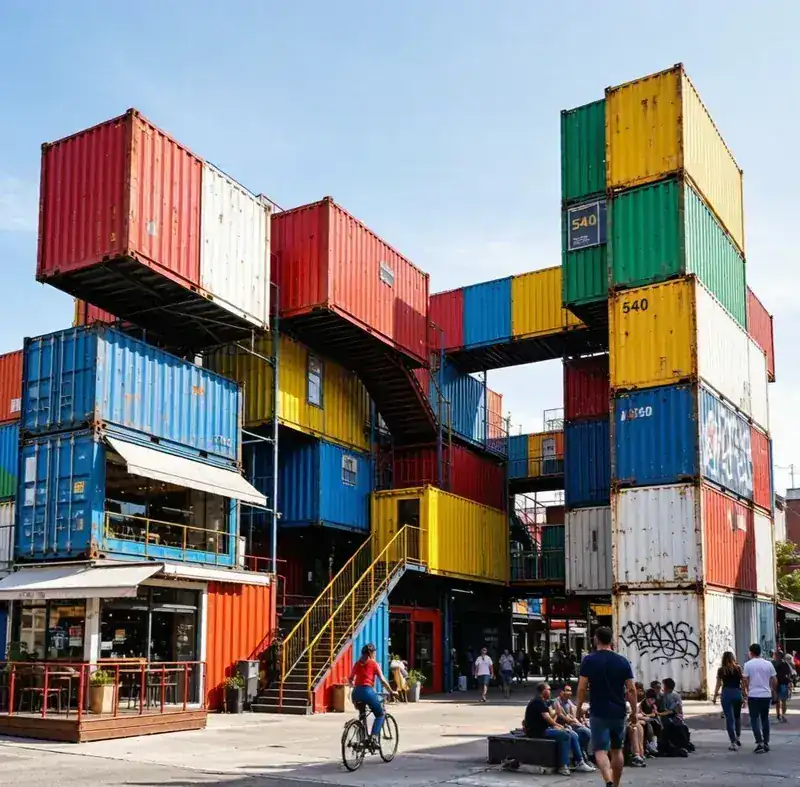
Container Houses in the USA
Factory-direct container homes shipped to the major U.S. ports — Los Angeles, Houston, New York/NJ, Miami and Seattle. Save 30–50% vs. local suppliers, with engineering tuned to your state’s climate and code posture.
States & Territories Served
Days Ocean Freight
Major Ports of Entry
Cost Savings vs. Local
Why U.S. Buyers Choose Us
Direct Factory Pricing
Sourcing straight from our Jiangsu manufacturing base skips importer markups, so U.S. buyers save 30–50% compared with domestic container-home suppliers.
Code-Aware Engineering
We design around the U.S. model building codes (IRC/IBC) and state amendments — from California Title 24 energy rules to Florida’s high-wind requirements — to smooth local approval.
Proven U.S. Logistics
Hundreds of units have landed at Los Angeles/Long Beach, Houston, New York/NJ, Miami and Seattle. We know the port, customs and inland-trucking ropes.
Climate Adapted
Hurricane coast, desert heat, mountain snow-load or Northeast freeze — we specify insulation, coatings and structure for the conditions your site actually sees.
Container Homes by State
Rules, climate and shipping differ sharply state to state. Pick your market for the specifics that affect approvals, specs and landed cost.
California
ADU-friendly laws, seismic zones & Title 24 energy — landed via LA/Long Beach & Oakland.
Texas
No statewide residential code; Gulf-coast wind zones — shipped to Houston & Galveston.
Florida
Strict high-wind building code (HVHZ); flood-aware siting via Miami, Jacksonville & Tampa.
New York
NYC/upstate split, cold-climate & snow-load specs — via Port of NY/NJ.
Read the guideOregon
Pacific-Northwest seismic & rain; ADU allowances — landed via Portland.
Washington
Seismic + energy-code focus; damp climate detailing — via Seattle/Tacoma.
Colorado
Mountain snow-load & wildfire considerations; Denver-front-range delivery.
Arizona
Desert heat & thermal performance; Phoenix/Tucson siting via SoCal ports.
State-level rules, climate specs and landed-cost math are covered in the USA container house buying guide.
Popular Container House Models for the USA
Flat pack, expandable and folding models — all shippable to every major U.S. port.
Flat Pack Container House
Best ValueQuick-assembly, cost-effective housing and site offices. Ideal for ADUs, workshops and remote projects.
- 6–8 units per 40HQ container
- 2–4 hour assembly per unit
- Best for: ADU, backyard office, site office
Expandable Container House
Most PopularExpands from a narrow box to a spacious 2–3 bedroom home. Popular for residential and guest accommodation.
- 20–30㎡ living space expanded
- Fold-out design, crane-assisted setup
- Best for: Homes, lodges, guest houses
Folding Container House
Space SaverFolds completely flat for maximum shipping density. Budget-friendly modular housing.
- 10–12 units per 40HQ container
- Rapid deploy for temporary needs
- Best for: Emergency housing, camps
Shipping to the USA — What You Need to Know
Ports & Transit Times
- Los Angeles / Long Beach: 18–25 days (primary West Coast entry)
- Oakland: 20–26 days
- Houston / Galveston: 24–32 days (Gulf Coast)
- Miami / Jacksonville / Tampa: 24–32 days (Southeast)
- New York / New Jersey: 28–35 days (East Coast)
- Seattle / Tacoma: 18–25 days (Pacific Northwest)
Customs & Import Basics
- HTS code: 9406.90 (prefabricated buildings) is the typical classification.
- U.S. import duties apply, plus any applicable Section 301 tariffs on China-origin goods — rates change, so we quote current figures.
- Documentation: commercial invoice, packing list, bill of lading, and certificate of origin.
- We provide a landed-cost quotation (freight + duties + last-mile trucking) before you commit.
Inland Transport
From the port to your site, container homes move by flatbed truck. A 40HQ container carries 6–8 flat-pack units, so a single truck run covers most small-to-mid projects. Remote or mountain sites (Colorado front range, upstate New York) should budget extra 1–3 days of transit.
Installation
Flat-pack units need a simple concrete slab and 3–4 workers for assembly (2–4 hours per unit). We supply English assembly manuals, video-call guidance, and optional on-site supervision for projects of 10+ units.
Get a Quote for Your U.S. Project
Tell us your state, quantity and budget — we’ll send a detailed quotation including shipping to your nearest U.S. port and current duty estimates.
Frequently Asked Questions
How long does shipping to the USA take?
From our factory to a U.S. port is typically 18–35 days depending on the gateway: West Coast (LA/Long Beach, Seattle) is fastest at 18–25 days, the Gulf and Southeast 24–32 days, and New York/NJ about 28–35 days. Inland trucking adds 1–5 days.
Are container houses legal / code-compliant in the U.S.?
There is no single U.S. building code — states and even counties adopt the IRC/IBC with their own amendments. Most jurisdictions can permit a container home, but the path varies (California is ADU-friendly; Florida enforces strict high-wind rules; Texas leaves much to local jurisdictions). We engineer to the relevant state posture and recommend a local architect or building official sign-off.
Can I use a container home as an ADU?
In many states — especially California — state law has expanded ADU rights and limited local bans, making container ADUs realistic in a lot of cities. Elsewhere it depends on local zoning. Check the state guide above and your city’s planning department.
What about tariffs and import duties?
Prefabricated buildings usually fall under HTS 9406.90. U.S. import duty applies plus any applicable Section 301 tariffs on China-origin goods. Rates shift over time, so we include a current landed-cost estimate in every quotation rather than quoting a fixed percentage.
Can I order just 1–2 units to test?
Yes — minimum order is 1 unit. A sample order is the best way to verify quality and local fit before scaling up. Single units ship via LCL (less-than-container-load) or consolidated freight.