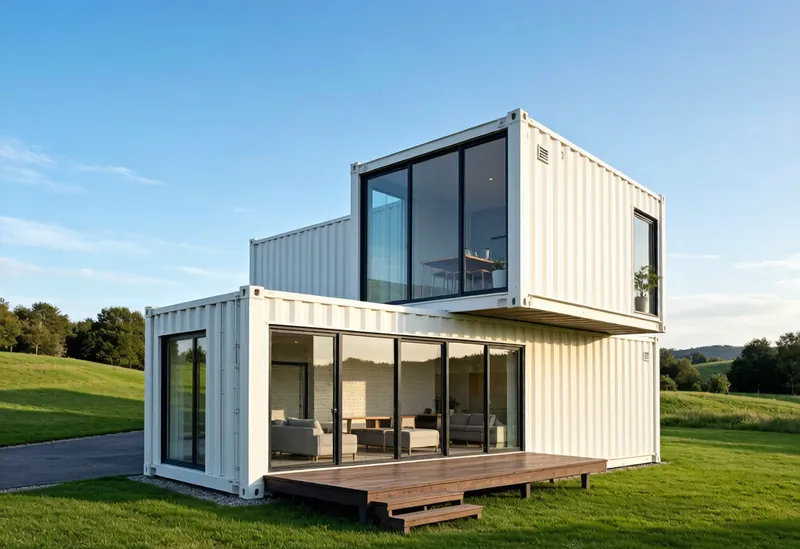
What Is a Shipping Container House?
A shipping container house is a building made from new or repurposed intermodal shipping containers — the same steel boxes that move cargo across oceans. Because the structure already exists as a standardized, engineered steel shell, you skip the slowest and most expensive part of construction: building the frame from scratch.
A single 20ft or 40ft container becomes one room; multiple containers can be welded, stacked, or joined side-by-side to create multi-room homes, offices, shops, and even multi-story buildings. In 2026, most buyers choose a factory-built, flat-pack or expandable variant rather than a bare welded box — these arrive as a kit, fold open in hours, and come fully finished with insulation, wiring, plumbing, windows, and flooring.
If you are comparing options, our container house buying guide and the flat pack vs other types comparison go deeper. For country-specific rules and landed prices, jump to the market guides by country.
Types of Shipping Container Houses
Not all container houses are the same. The four main families you will meet in 2026:
| Type | What it is | Best for | FOB China (2026) |
|---|---|---|---|
| Flat pack container house | Ships disassembled, bolts together on site in 2–4 hours | Dormitories, offices, camps, homes | 20ft $1,800–$2,500 / 40ft $3,200–$4,500 |
| Expandable container house | Compact in transit, hydraulically expands to ~3× the space | Family homes, resorts, clinics | 20ft $4,500–$6,000 / 40ft $8,000–$12,000 |
| Folding container house | Folds flat for tiny transport footprint, unfolds in minutes | Temporary & relocatable units | $2,000–$4,000 |
| Space capsule container house | Streamlined aluminum shell, smart-fitted, resort-grade | Glamping, scenic hotels, luxury pods | $4,000–$15,000 |
Each type solves a different problem. Flat pack wins on freight efficiency for bulk orders; expandable wins on livable space per dollar; folding wins on rapid deployment; space capsule wins on looks and guest experience. See the full flat pack guide and expandable options for specs.
How Much Does a Shipping Container House Cost in 2026?
The honest answer: there is no single price. A single landed unit typically costs $3,200–$9,000 in most markets, and $15,000+ in high-tax or remote destinations. Bulk orders (20+ units) close the gap with local construction fastest, landing around $2,800–$9,000 per unit all-in.
Factory (FOB China) baseline for 2026:
- 20ft flat pack unit: $1,800–$2,500
- 40ft flat pack unit: $3,200–$4,500
- 20ft expandable: $4,500–$6,000
- 40ft expandable: $8,000–$12,000
- Folding container: $2,000–$4,000
- Space capsule: $4,000–$15,000
“Landed and installed” adds international freight, import duty, foundation, crane/assembly, and utilities. Because duty and freight vary enormously by country, we maintain a dedicated global price guide and per-country breakdowns such as Sri Lanka, Malaysia, Ghana, Pakistan, Bangladesh, and Japan.
Pros and Cons of Shipping Container Houses
Pros
- Fast. Factory-built in 15–25 days; flat pack assembles in 2–4 hours on site.
- Cost-efficient. Roughly 40–60% cheaper per square meter than conventional local construction in many markets.
- Durable. Galvanized steel frame, 15–30 year service life, fire-resistant panels.
- Relocatable. Flat pack and folding units disassemble and move when you need to.
- Sustainable. Repurposed steel and factory-precise fabrication mean minimal on-site waste.
- Predictable. Fixed factory quote, no surprise contractor overruns.
Cons
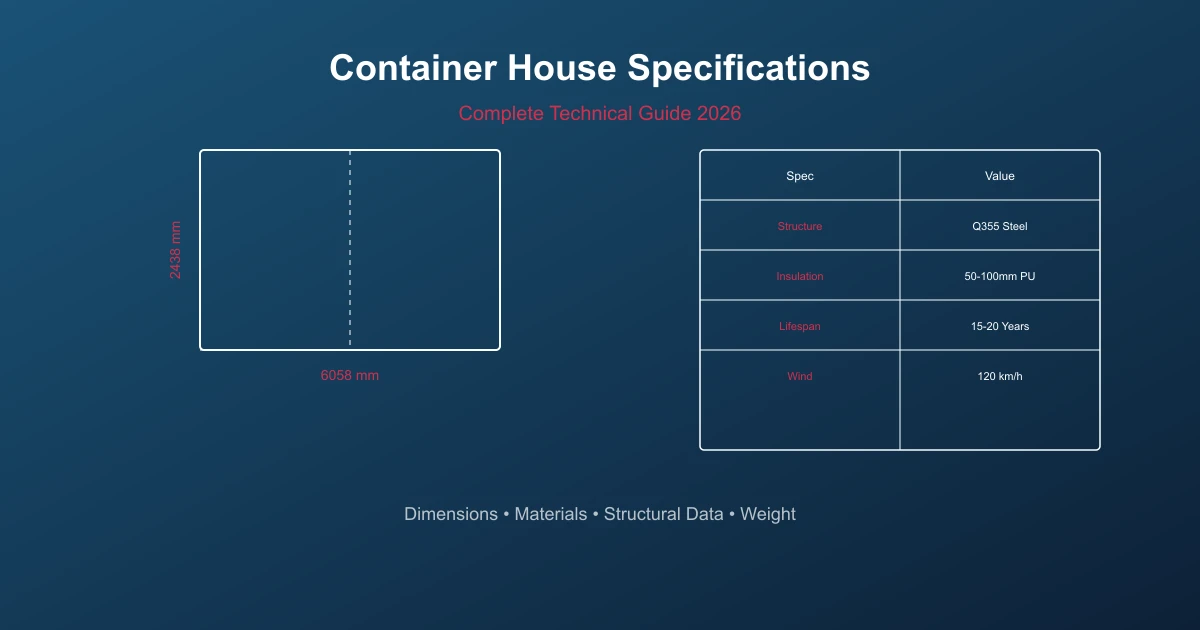
- Thermal bridging. Steel conducts heat; proper insulation (50–75mm rock wool or PU) is non-negotiable in hot or cold climates.
- Permits vary. Some cities still lack clear container-home rules — research permits early.
- Space is fixed by the box. Clever layouts matter; very large open plans need multiple containers joined.
- Freight & duty. The “cheap factory price” is only part of the landed cost — budget for shipping and tax.
- Resale perception. In some markets, financing and resale are less mature than for conventional homes.
Common Uses
A shipping container house is not just a home. The same engineered shell serves:
- Residential homes — from a single studio to multi-container family houses.
- Remote & off-grid living — see the off-grid guide.
- Container offices & site camps — the office guide covers specs.
- Retail kiosks & cafés — the retail kiosk business guide breaks down ROI.
- Wellness & leisure — saunas, glamping pods, and capsule hotels.
- Disaster relief & worker camps — rapidly deployable, standardized housing.
Many buyers start with one use and expand later. The complete buying guide helps you choose the right starting point.
Regulations, Permits & Standards
Container houses are buildings, so they answer to local building codes. The good news: because they are factory-engineered, they are easier to document than bespoke construction. Key things to confirm in your market:
- Zoning — is residential, commercial, or temporary use permitted on your lot?
- Structural standard — e.g. ISO 9001 manufacturing, and local norms (Australia AS 1170, Saudi SBC, Japan JIS/Article 81 seismic).
- Insulation & climate — wall spec matched to your temperature range.
- Foundation & utilities — footing type, electrical, plumbing, and drainage.
- Occupancy & fire — egress, smoke, and (where relevant) evacuation-facility rules.
Country guides cover the specifics — for example Japan’s Building Standard Law, Taiwan height limits, and US permits.
How to Buy a Shipping Container House: Step-by-Step Checklist
- Define the use — home, office, rental, or camp. This drives the type.
- Set the budget including landed cost, not just factory price. Use the price guide.
- Pick the type — flat pack, expandable, folding, or capsule (see comparison above).
- Confirm local rules — zoning, permits, and standards early.
- Shortlist suppliers — verify ISO 9001, factory area, and past projects. The China manufacturer guide explains what to audit.
- Get a detailed quote — itemize unit, freight, duty, foundation, install. Our import quotation guide lists every line item.
- Review specs — insulation, windows, electrical, plumbing, floor load.
- Plan logistics — 6–8 flat pack units fit one 40ft container, slashing freight.
- Assemble & inspect — 2–4 hour assembly per unit; QC before occupancy.
- Connect utilities & occupy — foundation, power, water, and certification.
The buying guide expands each step with checklists and red flags.
FAQ
What is a shipping container house?
A shipping container house is a building constructed from new or repurposed steel intermodal shipping containers. In 2026 most are factory-built flat-pack or expandable units that arrive as a finished kit and assemble in hours, complete with insulation, wiring, plumbing, and flooring.
How much does a shipping container house cost?
A single landed unit typically costs $3,200–$9,000 in most markets and $15,000+ in high-tax or remote areas. Factory (FOB China) prices in 2026 start at $1,800 for a 20ft flat pack and $4,500 for a 20ft expandable. See the full global price guide for country breakdowns.
Are shipping container houses cheaper than building a normal house?
In many markets they are 40–60% cheaper per square meter than conventional local construction, because the steel frame is pre-engineered in a factory and assembly takes hours rather than months. Savings are largest on bulk orders and in high-labor-cost countries.
How long do shipping container houses last?
With galvanized steel framing and proper coatings, a quality container house has a 15–30 year service life. Maintenance is low: periodic repainting of exposed steel and checks on seals and insulation.
Do I need a permit for a shipping container house?
Usually yes — container houses are buildings and must meet local zoning, structural, and occupancy codes. Rules vary widely by city and country, so confirm permits and standards before you buy. Start with our US permits guide or your local building office.
Can shipping container houses be expanded later?
Yes. Flat pack and folding units are modular and can be added or relocated as needs grow. Many owners begin with one unit and join more containers later for extra rooms or floors.
What is a container bungalow?
A container bungalow is a single-storey home built from one or more shipping containers, usually laid out as a low, wide plan with a generous front deck. Bungalow-style container homes suit warm climates and flat sites, and they read as a relaxed, modern dwelling rather than an industrial box.