Most “container house reviews” rate a product you have never seen. This one reviews projects we actually shipped — the good, the hard parts, and the decisions that changed outcomes. No star ratings; the numbers below come from delivered work, not marketing.
What we delivered (and where)
| Project | Location | Scale | Build time |
|---|---|---|---|
| Labor camp complex | Saudi Arabia (NEOM) | 300 units | Bulk, 50+ units/week capacity |
| Container street | Cape Town, South Africa | 24 units, 1,200 m² | 45 days |
| Capsule resort | Bali, Indonesia | 8 space-capsule units | 21 days + infrastructure |
| Office campus | Bangkok, Thailand | 6 expandable units | 10 days to operational |
| Mining camps | Australia, South Africa, Chile | 200+ units | 6–8 units per 40HQ |
These span five countries and four use cases: workforce housing, retail/street, hospitality, and commercial office.
What worked
Flat pack freight efficiency. Shipping 6–8 units per 40HQ container is the single biggest cost lever for overseas projects. The Cape Town container street fit 24 units plus fit-out into a handful of containers, which is why a 1,200 m² development landed without a freight blowout.
Fast on-site assembly. Flat pack units assemble in roughly 2–4 hours with 3–4 workers and no crane. The Bangkok office campus went from delivered containers to a working 40 m² workspace in under 30 minutes per expandable unit, fully operational in 10 days.
Occupancy and footfall. The Bali capsule resort holds about 95% occupancy year-round, and the Cape Town container street draws over 50,000 visitors a month while supporting 80+ local businesses. Those are operating results, not renderings.
Where it got hard
Foundation and ground prep. The biggest schedule risk is never the container — it is the slab, piers, or screw piles underneath. Remote or sloped sites (mining camps, cliff-side resorts) need the foundation design locked before containers ship. See our foundation guide for type selection.
Climate specification. A unit going to a Chilean mine is not the same as one going to a Thai resort. Insulation, electrical standard (220V/50Hz vs 110V/60Hz), and corrosion protection must be specified at RFQ, not discovered on site. Our import quotation guide covers how to write that into the request.
Bulk procurement discipline. The 300-unit NEOM camp only stayed on schedule because sample units were approved before mass production and a comparison matrix tracked steel thickness, insulation, and certifications across factories. The labor camp procurement guide lays out the step-by-step process.
Flat pack vs the alternatives (our verdict)
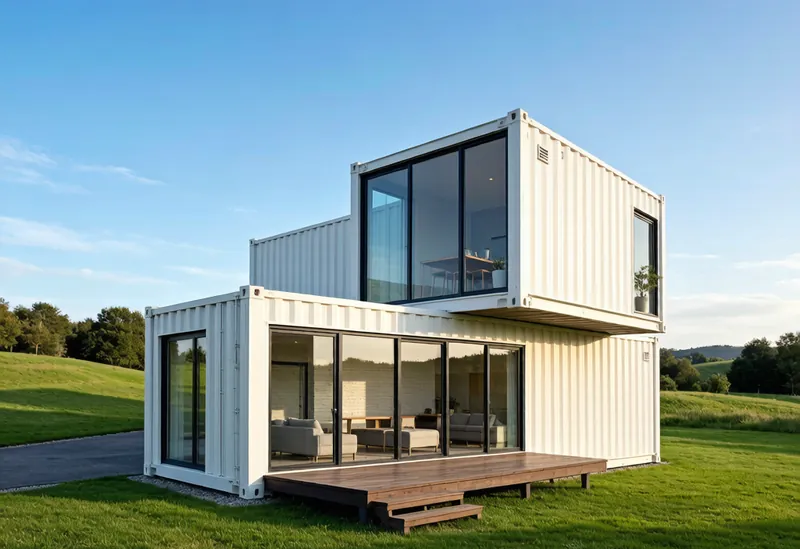
For workforce housing and camps, flat pack wins on freight and assembly speed — that is why it is now the default for EPC contractors. For premium hospitality, space-capsule and expandable units win on guest experience but cost more per m². For permanent homes, a two-story flat pack build (like our Melbourne project) gives the most floor area per dollar.
Lessons for your project
- Specify climate and electrical at RFQ. It is cheaper to build right than to retrofit.
- Lock the foundation before shipping. Site prep, not fabrication, drives the critical path.
- Approve a sample before bulk. One sample unit prevents 300 wrong units.
- Use a comparison matrix, not headline price. Thinner steel and cheaper insulation hide inside the lowest quote.
Related reviews and guides
- How to vet a container house supplier — the 7 checks that predict delivery quality.
- Flat pack container house guide — types, specs, and pricing.
- Container house cost guide — real 2026 price ranges by type.
- Browse delivered projects — case studies with photos and specs.