Introduction
The container house industry is experiencing unprecedented growth. What started as a niche solution for temporary housing has evolved into a mainstream construction method that is reshaping how we think about buildings.
As someone who has been in this industry for years, I have witnessed firsthand the transformation. In this article, I will share my insights on where the industry is heading in 2026 and beyond.
Market Overview: Explosive Growth
Global Market Size
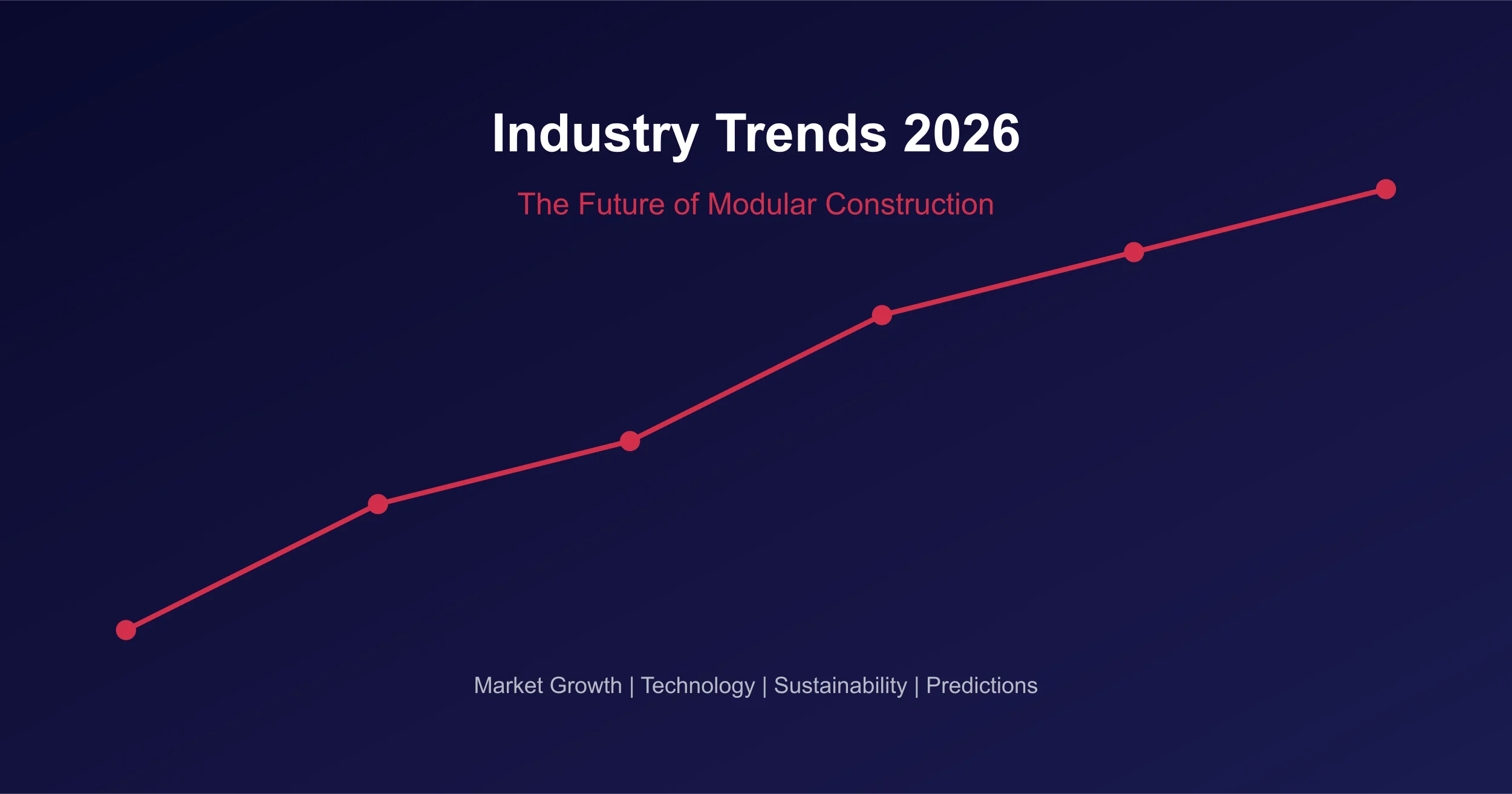
The modular construction market is projected to reach $230 billion by 2030, growing at a CAGR of 6.9%.
| Year | Market Size | Growth Rate |
|---|---|---|
| 2023 | $130 billion | - |
| 2024 | $145 billion | 11.5% |
| 2025 | $162 billion | 11.7% |
| 2026 | $180 billion | 11.1% |
| 2030 | $230 billion | 6.9% CAGR |
Key Growth Drivers
1. Housing Affordability Crisis Global housing prices have increased 40% since 2020, making traditional homes unaffordable. Container houses offer a 60% cost reduction.
2. Remote Work Revolution The shift to remote work has increased demand for home offices, ADUs, and flexible living spaces.
3. Sustainability Demands Container houses produce 90% less waste than traditional building methods.
4. Speed Requirements Container houses can be operational in days to weeks, not months.
Regional Market Analysis
Asia-Pacific: The Manufacturing Hub
| Country | Market Share | Strengths |
|---|---|---|
| China | 70% | Manufacturing scale, cost efficiency |
| Australia | 10% | Mining camp demand, high standards |
| Japan | 5% | Disaster relief, compact design |
| South Korea | 5% | Modular construction innovation |
Middle East: Rapid Expansion
The Middle East is experiencing explosive growth driven by:
- Saudi Arabia Vision 2030: Massive labor camp requirements
- UAE Tourism: Glamping and luxury container resorts
- Qatar Infrastructure: Worker accommodation for mega-projects
Africa: Emerging Market
Africa represents the fastest-growing market:
- South Africa: Mining camps and worker housing
- Nigeria: Affordable housing solutions
- Kenya: Educational and medical facilities
Americas: Diverse Applications
Strong growth in:
- USA: ADU market, disaster relief, affordable housing
- Canada: Remote site accommodation
- Brazil: Favela upgrading, emergency housing
Technology Innovations
1. Smart Home Integration
| Feature | Description |
|---|---|
| IoT Sensors | Temperature, humidity, occupancy monitoring |
| Smart Lighting | Automated, energy-efficient LED systems |
| Climate Control | AI-powered HVAC optimization |
| Security Systems | Remote monitoring, smart locks |
| Energy Management | Solar integration, battery storage |
2. Advanced Materials
| Innovation | Benefit |
|---|---|
| Aerogel Insulation | 3x better insulation, 50% thinner walls |
| Self-Healing Concrete | Automatic crack repair |
| Phase-Change Materials | Passive temperature regulation |
| Recycled Composites | Sustainable, lightweight panels |
3. Construction Automation
| Technology | Application |
|---|---|
| Robotic Welding | Consistent, high-quality joints |
| 3D Printing | Custom components, reduced waste |
| BIM Integration | Digital twin for precise planning |
| Drone Surveys | Site assessment, progress monitoring |
Sustainability Focus
Environmental Impact Comparison
| Metric | Traditional | Container House | Savings |
|---|---|---|---|
| CO2 Emissions | 100% | 30-40% | 60-70% |
| Water Usage | 100% | 20-30% | 70-80% |
| Waste Generation | 100% | 5-10% | 90-95% |
| Energy Consumption | 100% | 40-50% | 50-60% |
Green Certifications
| Certification | Relevance | Requirements |
|---|---|---|
| LEED | High | Energy efficiency, materials, indoor quality |
| BREEAM | High | Sustainability, health, energy |
| Passive House | Medium | Ultra-low energy consumption |
Application Evolution
Traditional Applications
| Application | Market Share | Growth |
|---|---|---|
| Mining Camps | 35% | Stable |
| Construction Sites | 25% | Growing |
| Emergency Housing | 15% | Stable |
| Worker Dormitories | 15% | Growing |
Emerging Applications
| Application | Market Share | Growth Rate |
|---|---|---|
| Glamping/Hospitality | 5% | 25% annually |
| ADU/Granny Flats | 3% | 30% annually |
| Retail/Commercial | 2% | 20% annually |
| Education/Healthcare | 2% | 15% annually |
Industry Challenges
Regulatory Barriers
| Challenge | Impact | Solution |
|---|---|---|
| Building Codes | High | Industry advocacy |
| Zoning Laws | Medium | Work with authorities |
| Permit Process | Medium | Streamlined systems |
Perception Issues
| Perception | Reality | Action |
|---|---|---|
| Temporary/cheap | 15-20 year lifespan | Education |
| Not suitable for cold | Works in -40C to +50C | Climate marketing |
| Limited design | Fully customizable | Showcase projects |
Future Predictions
Short-Term (2026-2027)
- ADU market explosion (50% growth)
- Smart home becomes standard
- Sustainability mandates increase
Medium-Term (2028-2029)
- 3D-printed components reduce costs
- Autonomous assembly technology
- Net-zero standard becomes common
Long-Term (2030+)
- Space habitat testing
- Self-healing materials
- Full construction automation
Investment Opportunities
For Manufacturers
| Opportunity | Investment | ROI Timeline |
|---|---|---|
| Smart home integration | $500K-1M | 12-18 months |
| Automation upgrades | $1M-5M | 24-36 months |
| Regional factories | $2M-10M | 36-48 months |
For Developers
| Opportunity | Investment | ROI Timeline |
|---|---|---|
| Container hotel chains | $500K-2M | 18-24 months |
| ADU rental portfolios | $200K-1M | 12-18 months |
| Glamping resorts | $300K-1.5M | 24-36 months |
Recommendations
For Buyers
- Start Small: Begin with a single unit to test the concept
- Focus on Quality: Do not compromise on materials for price
- Plan for Growth: Design modular systems that can expand
- Think Long-term: Consider 15-20 year lifecycle costs
- Embrace Technology: Invest in smart home features
For Manufacturers
- Automate Production: Reduce costs and improve consistency
- Invest in R&D: Stay ahead of technology curve
- Build Brand: Differentiate through quality and service
- Expand Regions: Reduce shipping costs with local factories
- Focus on Sustainability: Meet growing green demands
Conclusion
The container house industry is at an inflection point. What was once a niche solution is now mainstream construction. By 2030, container houses will represent 15-20% of new construction in key markets.
The future of construction is modular, sustainable, and intelligent. And it is happening now.
About the Author
Related Guides
- Container House Cost Guide
- Container Home vs Tiny House
- Container Home vs Modular Home
- Expandable Container House Price Guide
Kevin Zhang is the founder of EasiHive, a technology-driven modular building manufacturer based in Suzhou, China. With 16,000 m2 of production facilities across 3 specialized factories, EasiHive has delivered container buildings to clients across 50+ countries.
- Website: https://www.easihive.com
- Email: info@easihive.com
- LinkedIn: linkedin.com/company/easihive
Tags: ContainerHouse, ModularConstruction, ConstructionIndustry, SustainableBuilding, ConstructionInnovation, FutureOfConstruction, GreenBuilding, PropTech, RealEstate