Quick Answer: Container House Prices in France 2026
Container house prices in France are $3,000–$12,000 landed to Le Havre or Marseille in 2026. Factory prices from China: 20ft flat pack from $800, 20ft expandable from $2,500, and 40ft expandable from $4,500 (FOB). Add sea freight to Le Havre, Marseille or Dunkirk ($1,500–3,500 per 20ft unit) plus EU import duty (0–2.7%) and 20% French VAT for the full landed cost. RE 2020-compliant “maison conteneur” homes for Paris, Lyon and Bordeaux ship from China in 4–5 weeks with EU-compliant (Eurocode + CE) documentation.
The French Container House Market in 2026
France is one of Europe’s most promising container housing markets, powered by a convergence of housing demand, construction industry transformation, and a cultural shift toward sustainable living. Known locally as “maison conteneur” or “maison container,” prefabricated steel homes have moved from niche curiosity to mainstream alternative in the French construction landscape.
Market Drivers
Several structural forces make France an ideal market for container housing in 2026.
Housing affordability pressure. Paris remains one of Europe’s most expensive cities, with average property prices exceeding EUR 10,000 per square meter in central arrondissements and hovering around EUR 5,000-7,000 in the inner suburbs. Lyon, Bordeaux, and Nice have followed Paris on a decade-long price trajectory that has priced many first-time buyers and young families out of conventional housing. A factory-built container house at EUR 800-2,500 per square meter (all-in) offers a radical cost alternative.
Construction sector labor shortage. France faces a well-documented shortage of skilled construction workers, with the Federation Francaise du Batiment (FFB) reporting persistent recruitment difficulties across trades. Prefabricated container houses sidestep this bottleneck because 80-90% of fabrication happens in a factory with a smaller, more efficient workforce, and site assembly requires days rather than months of on-site labor.
Rural revitalization and remote work. Post-2020 remote work policies have accelerated migration from Paris and other metro centers to rural France, particularly the Loire Valley, Dordogne, Normandy, and Provence. Container houses — especially expandable and space capsule models — are popular as quick-build rural residences and creative studios where traditional construction timelines and contractor availability are prohibitive.
Tourism and short-term rental demand. France is the world’s most-visited country, with over 90 million international arrivals annually. The “chambre d’hote” (bed and breakfast) and “meuble de tourisme” ( furnished rental) market is booming, particularly in Provence, the French Riviera (Cote d’Azur), Brittany, and the Loire Valley wine regions. Container-based glamping cabins and holiday homes offer property owners a fast, low-capital route to entering the tourism rental market.
EU sustainability mandates. The European Green Deal and France’s RE 2020 (Reglementation Environnementale 2020) impose aggressive energy-efficiency and carbon-footprint requirements on new buildings. Repurposed steel containers with high-performance insulation align with these mandates by reducing embodied carbon compared to new-construction concrete and masonry.
Key Regions
- Paris and Ile-de-France — office modules, urban ADUs, construction site accommodations for the Grand Paris infrastructure megaproject
- Lyon — creative studios, urban infill housing, worker accommodations for the booming tech and logistics sector
- Bordeaux — wine-tourism guest houses, vineyard worker housing, urban residential infill
- Marseille and the Cote d’Azur — holiday villas, resort staff housing, Airbnb rental units
- Provence and the Luberon — agritourism cabins, artist studios, rural retreats
- Loire Valley — chateau-adjacent guest cottages, winery tourism accommodations
- French Alps (Savoie, Haute-Savoie) — ski chalets, mountain refuges, seasonal resort staff housing
- Brittany and Normandy — coastal holiday homes, seafood industry worker housing
- Toulouse and Occitanie — aerospace industry worker camps, university-adjacent student housing
Why Container Houses for France?
| Benefit | Impact |
|---|---|
| EU Compliant | Engineered to Eurocode standards for CE marking and permit approval across all French departments |
| RE 2020 Aligned | High-performance insulation and energy-efficient glazing meet France’s strict new energy regulation |
| Rapid Deployment | Factory production in 15-25 days; on-site assembly in hours for flat pack, days for expandable |
| Cost Efficient | 30-50% savings versus conventional masonry construction at EUR 800-2,500 per m2 all-in |
| Sustainable | Repurposed steel frame, minimal site waste, low embodied carbon — aligned with EU Green Deal targets |
| Relocatable | Flat pack units can be disassembled and moved to a new site, ideal for construction camps and seasonal tourism |
| Paris Housing Pressure | Container ADUs and infill units offer affordable alternatives in the Ile-de-France price crisis |
| Fire Rated | Steel frame with fire-rated panel systems achieves Euroclass A or B ratings for French permit requirements |
| Low Maintenance | Galvanized steel frame, powder-coated exterior panels, 20-30 year service life with minimal upkeep |
| Customizable | Floor plans, cladding (wood, composite, render), interior finish grade, and MEP systems all configurable to French taste |
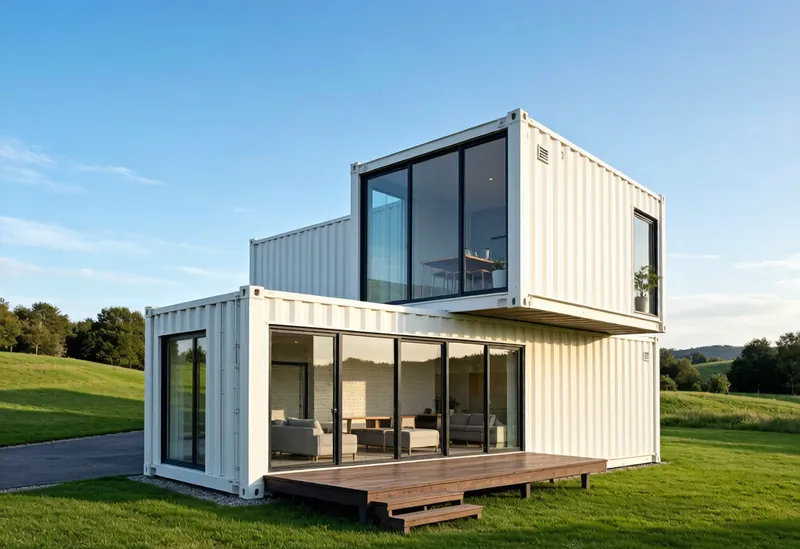
French buyers choose container houses for one dominant reason: a fully functional, architecturally appealing dwelling at roughly half the cost of conventional construction, delivered in a fraction of the time. The flat pack format is especially popular because it eliminates crane dependency — two to four workers and a small forklift can assemble a 20ft flat pack unit in a day, which makes it viable on tight urban lots in Paris, Lyon, and Marseille where crane access is impossible.
Popular Applications in France
| Application | Recommended Type | Location Examples |
|---|---|---|
| Urban ADU / Infill Housing | Expandable | Paris, Lyon, Marseille, Toulouse, Nice |
| Primary Rural Residence | 40ft Expandable | Dordogne, Loire Valley, Normandy, Provence |
| Construction Site Offices | Flat Pack | Grand Paris Express, A69 motorway, Lyon metro extension |
| Worker & Labor Camp Housing | Flat Pack | Infrastructure projects, agricultural zones, vineyards |
| Holiday Rental / Chambre d’Hote | Expandable / Space Capsule | Cote d’Azur, Provence, Loire Valley, Brittany coast |
| Glamping Cabins | Space Capsule | Luberon, Pyrenees, Dordogne, Corsica |
| Creative Studio / Atelier | Flat Pack | Lyon, Bordeaux, Montpellier, Nantes |
| Wine Tasting Room / Boutique | Flat Pack | Bordeaux, Burgundy, Champagne, Alsace |
| Student Housing | Flat Pack | Toulouse, Montpellier, Lille, Strasbourg university areas |
| Emergency / Social Housing | Folding | Municipal programs, disaster relief, refugee accommodation |
| Retail Pop-up / Kiosk | Flat Pack | Paris, Lyon, Marseille urban districts and markets |
Construction companies and infrastructure contractors are the highest-volume buyers. France’s ongoing Grand Paris Express metro expansion, LGV high-speed rail projects, and wind farm installations generate sustained demand for flat pack site offices and crew dormitories, often in orders of 10-100+ units. Tourism operators represent the fastest-growing segment, with container-based glamping and holiday rentals proliferating across Provence, the Alps, and the Atlantic coast.
Container House Prices in France (2026)
Prices below follow the EasiHive global price system (2026): flat pack from $1,800, expandable from $4,500, folding from $2,000, space capsule from $4,000 for 20ft models. All factory prices are FOB (Ex-Works) from the China factory, including standard finishes and export packaging.
Factory Price and Landed Cost by Type
| Model | Factory Price (FOB) | Landed Le Havre | Landed Marseille | Landed Dunkirk |
|---|---|---|---|---|
| 20ft Flat Pack | $1,800-$2,500 | $3,500-$5,200 | $3,800-$5,500 | $3,600-$5,300 |
| 40ft Flat Pack | $3,200-$4,500 | $5,800-$7,800 | $6,100-$8,100 | $5,900-$7,900 |
| 20ft Folding | $2,000-$4,000 | $3,800-$6,500 | $4,100-$6,800 | $3,900-$6,600 |
| 20ft Expandable | $4,500-$6,000 | $6,800-$9,200 | $7,100-$9,500 | $6,900-$9,300 |
| 40ft Expandable | $8,000-$12,000 | $11,200-$16,500 | $11,500-$16,800 | $11,300-$16,600 |
| Space Capsule | $4,000-$15,000 | $7,000-$19,500 | $7,300-$19,800 | $7,100-$19,600 |
| Labor Camp Dormitory (bulk, per unit) | $1,300-$2,000 | $3,000-$4,800 | $3,300-$5,100 | $3,100-$4,900 |
Landed cost includes the factory price, ocean freight, EU port handling, customs clearance fees, and EU import duties. French VAT (20%) is additional and payable at customs clearance — see the import section below. For bulk orders (10+ units), flat pack units load 6-8 per 40ft container, which can cut per-unit freight by 40-60%. See our Container House Cost Guide for the full cost breakdown and per-type shipping math.
Additional Costs to Budget (France)
| Item | Cost Estimate |
|---|---|
| EU Customs Clearance Broker | EUR 150-350 |
| Port Handling / Terminal Charges | EUR 200-500 |
| Inland Trucking (port to site) | EUR 500-3,000 by distance |
| Foundation (per unit) | EUR 1,500-4,500 |
| Utility Connections (water, electric, sewage) | EUR 2,500-7,000 |
| Permis de Construire / Declaration Prealable Fees | EUR 200-2,000 |
| French VAT (20% on CIF + duty) | 20% of (CIF value + import duty) |
| RE 2020 Energy Study (if required) | EUR 500-1,500 |
Need a precise quote for your French port and quantity? Request a quote and we will confirm the exact landed cost to your port of choice.
Shipping to France
Main French Ports
| Port | Region | Transit Time | Best For |
|---|---|---|---|
| Le Havre | Normandy, North | 30-35 days | Paris, Ile-de-France, Normandy, Hauts-de-France, Brittany |
| Marseille-Fos | Mediterranean, South | 33-38 days | Provence, Cote d’Azur, Languedoc, Occitanie, Corsica |
| Dunkirk (Dunkerque) | Hauts-de-France, North | 30-35 days | Northern France, Belgium border, Paris via A26 |
| Bordeaux (Bassens) | Atlantic, Southwest | 35-40 days | Nouvelle-Aquitaine, wine regions, Basque Country |
Shipping Cost (per 20ft unit)
| Type | Cost |
|---|---|
| Flat Pack | $1,000-$1,800 |
| Folding | $1,200-$2,000 |
| Expandable | $1,400-$2,200 |
| Space Capsule | $2,200-$3,200 |
Inland Transportation in France
For delivery beyond the port, inland trucking applies. France’s autoroute network is excellent, and most sites are reachable within a half-day drive from Le Havre or Marseille.
| Distance from Port | Cost Estimate |
|---|---|
| 0-100 km | EUR 400-800 |
| 100-300 km | EUR 800-1,500 |
| 300-600 km | EUR 1,500-2,500 |
| 600+ km | EUR 2,500-3,500 |
Port choice rule of thumb: if your site is in northern or central France (Paris, Lyon, Lille, Strasbourg), Le Havre or Dunkirk minimizes trucking costs. For Provence, the Riviera, and the south, Marseille is the obvious choice. Bordeaux port serves the southwest efficiently. For large camp orders, consolidating 6-8 flat pack units per container makes the per-unit inland cost negligible.
Importing a Container House to France
Importing a prefabricated container house from China into France follows the standard EU customs process. France applies EU Common External Tariff rates, and clearance is handled through the French customs authority (Direction Generale des Douanes et Droits Indirects).
HS Code and Duty Rates
The correct classification for a complete prefabricated building of iron or steel is CN 9406.20 (Prefabricated buildings of iron or steel) under the EU Combined Nomenclature:
| CN Code | Description | EU Duty Rate |
|---|---|---|
| 9406.20 | Prefabricated buildings of iron or steel | 0% |
| 9406.90 | Prefabricated buildings, other materials | 0% |
| 7308.90 | Steel structures and parts thereof | 0-2.7% |
Complete prefabricated buildings under CN 9406.20 enter the EU at a 0% duty rate, which is the most favorable classification. Some suppliers ship units as structural components and panels (CN 7308) to clear in multiple shipments, but this rarely lowers cost and can complicate building-code documentation. Most importers enter complete buildings under 9406.20.
French VAT
France applies a standard 20% TVA (Valeur Ajoutee) on the CIF (Cost, Insurance, Freight) value plus any import duty. On a unit with a CIF value of $5,000, the TVA would be approximately $1,000 (20% of $5,000). This is payable at customs clearance and is recoverable if the buyer is a VAT-registered business (which most professional buyers are).
Reduced VAT rates may apply in specific cases:
- 10% for renovation of residential buildings older than 2 years
- 5.5% for energy-efficiency renovation work (isolation thermique, etc.)
Consult your French accountant to determine if reduced rates apply to your project.
Customs Clearance Steps
- Shipment departs China with full export documentation (commercial invoice, packing list, bill of lading, certificate of origin).
- Vessel arrives at the French port; customs processes the entry through DELTA G (the EU’s customs declaration system).
- Your customs broker files the Single Administrative Document (SAD) declaration.
- CN code classification is confirmed; duty (if any) and TVA are assessed.
- TVA and any duty are paid; cargo is released.
- Arrange inland trucking from the port to your site.
EU Customs Union advantage: once cleared in France, the goods can move freely to any EU member state without additional customs formalities. This is relevant if your supplier ships to Le Havre but your site is in, say, Belgium or Luxembourg — the single clearance at Le Havre covers onward transport.
EasiHive Import Support
EasiHive provides full export documentation (commercial invoice, packing list, bill of lading, certificate of origin, CE marking documentation) and can arrange DDP (Delivered Duty Paid) delivery to your French address, where we handle freight and customs on your behalf. For EXW/FOB buyers, we coordinate with your freight forwarder and customs broker to ensure smooth clearance. Request a supplier quote.
Compliance and Building Standards
French construction is governed by national regulations administered at the departmental level by the Direction Departementale des Territoires (DDT). Container houses for France must comply with:
| Standard | What It Covers |
|---|---|
| RE 2020 (Reglementation Environnementale 2020) | France’s current energy and environmental regulation for new buildings, replacing RT 2012. Covers energy consumption (Bbio), carbon footprint (Cep), summer comfort, and lifecycle carbon |
| Eurocode 3 (EN 1993) | Steel structural design — the engineering standard for container house frames |
| Eurocode 1 (EN 1991) | Actions on structures — wind, snow, seismic, and imposed loads for French zones |
| NF DTU Standards | French technical standards for construction (DTU 31.2 for steel buildings, etc.) |
| EU Construction Products Regulation (CPR) | CE marking requirements for construction products used in the EU |
| Fire Safety (Reglementation Incendie) | Euroclass fire reaction ratings; French IGH and ERP fire codes for public-access buildings |
| Environmental Impact (Loi ELAN) | French law governing housing innovation, including simplified permitting for certain modular constructions |
| Permis de Construire | Building permit issued by the mairie (town hall) for structures over 20 m2 or in protected zones |
RE 2020 Energy Compliance
RE 2020, effective since January 2022, is the most significant regulatory factor for container houses in France. Key requirements:
- Bbio (Bioclimatic Need): the building envelope must minimize energy demand through passive design (orientation, insulation, thermal bridge management)
- Cep (Primary Energy Consumption): maximum kWh/m2/year for heating, cooling, lighting, ventilation, and domestic hot water
- Cep,nr (Renewable Energy): minimum renewable energy production or self-consumption
- IC (Carbon Impact): lifecycle carbon emissions of the building, including embodied carbon of materials
Container houses can meet RE 2020 when specified with:
- 75-100mm polyurethane (PU) or mineral wool insulation in walls and roof
- Double or triple glazing with low-emissivity (Low-E) coatings
- Thermal bridge elimination at junction details
- Heat recovery ventilation (VMC double flux)
- Optional rooftop solar panels
EasiHive containers are engineered for RE 2020 compliance. We provide thermal performance calculations (Bbio, Cep) and insulation specifications that your project architect or thermicien (energy consultant) can integrate into the regulatory submission.
Permis de Construire (Building Permit)
Most permanent container houses in France require a permis de construire (building permit), filed with the local mairie. Key thresholds:
- Under 5 m2: no permit needed
- 5-20 m2: declaration prealable (prior declaration) only
- Over 20 m2 or in protected zones (ABF): full permis de construire required
- In zones protegees (architecte des batiments de France): additional aesthetic review; wood or composite cladding may be required to match the local architectural style
Processing time: typically 2-3 months for a standard permis de construire, longer in ABF zones. A container house submitted with proper structural engineering documentation (Eurocode calculations, RE 2020 energy study, fire safety certificates) has a strong approval track record.
EasiHive provides the structural documentation, energy performance data, and fire safety certificates your architect or project manager needs for the permis de construire application.
Climate-Specific Solutions by French Region
France spans Atlantic, Mediterranean, continental, and alpine climate zones. Specify insulation, glazing, and weather protection for your region:
| Region | Climate Challenge | Recommended Specification |
|---|---|---|
| Paris / Ile-de-France (Temperate) | Cold winters (-5 to 5 deg C), warm summers, moderate rain | 75mm PU insulation, double Low-E glazing, standard ventilation |
| Provence / Cote d’Azur (Mediterranean) | Hot dry summers (35+ deg C), mild winters, Mistral wind | 50-75mm PU, reflective cool roof, UV-resistant exterior coating, wind-resistant anchoring |
| Alps / Jura (Alpine) | Heavy snow, cold winters (-10 to -20 deg C), short summers | 100mm PU, triple glazing, snow-load-rated roof (1.0+ kN/m2), deep frost foundation |
| Brittany / Normandy (Oceanic) | High humidity, driving rain, salt air, mild temperatures | 75mm PU, enhanced vapor barrier, anti-corrosion marine-grade coating, wind-rated anchoring |
| Northern France / Hauts-de-France | Cold damp winters, moderate snow, wind | 75mm PU, double glazing, enhanced moisture management |
| Southwest / Nouvelle-Aquitaine | Warm summers, mild winters, Atlantic storms | 50-75mm PU, storm-rated windows, corrosion treatment for coastal sites |
Design Features for France
- 75mm minimum insulation for RE 2020 compliance in all zones; 100mm for Alpine and mountain areas
- Double Low-E glazing standard; triple glazing for Alpine and high-altitude sites
- Anti-corrosion coating for coastal departments (Finistere, Var, Alpes-Maritimes, etc.)
- Fire-rated panel systems achieving Euroclass A2 or B for French fire regulations
- Snow-load-rated roof design for departments with snow load requirements (Alps, Pyrenees, Massif Central, Jura)
- Mistral and Tramontane wind-rated anchoring for Provence and Languedoc sites
- Optional wood cladding (bardage bois) for ABF-protected zones and aesthetic integration
Installation Guide for France
Site Preparation
- Verify zoning and permit status — confirm that your parcel allows the intended use (residential, commercial, tourism) and that the permis de construire or declaration prealable has been approved by the mairie.
- Foundation — for permanent installations, a reinforced concrete slab or point foundations (pieds en beton) per the structural engineer’s specifications. For temporary or seasonal installations, compacted gravel pads with concrete blocks may suffice depending on local DDT requirements.
- Utility planning — arrange raccordement (connection) to the municipal water, electricity (Enedis), and sewer (or septic tank with SPANC approval for rural sites) before delivery.
- Access — ensure the delivery truck (typically 13.6 m flatbed) can reach the site. Flat pack units arrive on standard trucks; expandable units require slightly more maneuvering room.
Assembly
- Flat pack: arrives as a bolted panel kit; 2-4 workers assemble on a prepared foundation in 4-8 hours with basic hand tools and a forklift. No welding or crane required.
- Expandable: arrives as a pre-assembled unit; unfolds on-site with hydraulic or manual mechanism in 2-4 hours. Requires clear ground space for the unfolding footprint.
- Folding: similar to expandable; deploys in 2-4 hours with a small crew.
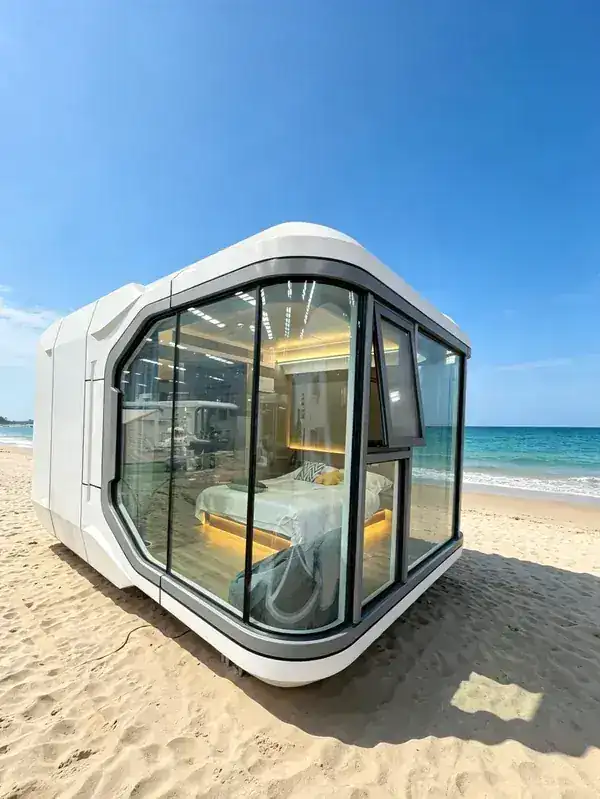
- Space capsule: arrives as a complete unit; requires crane placement onto prepared foundation. Installation in half a day.
MEP Connections
After placement, a licensed French artisan (electricien, plombier) connects the unit to site utilities per French NF C 15-100 (electrical) and NF DTU 60.1 (plumbing) standards. Most flat pack and expandable units come pre-wired and pre-plumbed to French standards with connection points at the base.
Inspection and Handover
For permis de construire projects, the mairie or DDT may request a conformity inspection (reception de travaux) to verify that the installed building matches the approved plans. EasiHive provides as-built documentation and conformity certificates.
Internal Links: European Market Guides
Planning a container house project across Europe? Explore our country-specific guides:
- Container Houses in Germany — the largest EU market with strong prefab acceptance
- Container Houses in Italy — Mediterranean climate solutions and EU compliance
- Container Houses in Spain — coastal and inland market guide
- Container Houses in Portugal — Atlantic and Mediterranean solutions
- Container Houses in the Netherlands — innovative low-country applications
- Container Houses in Poland — Central European market and logistics
- Container Houses in Greece — island and mainland solutions
- Container Houses in Sweden — Nordic climate and energy compliance
- Container Houses in Denmark — Scandinavian design and sustainability
- Container Houses in Norway — Arctic-grade solutions
- Container Houses in Finland — extreme cold-climate engineering
- Container Houses in Romania — emerging Eastern European market
- Container Houses in Ukraine — emergency and reconstruction housing
Beyond Europe:
- Container Houses in USA — ADU and residential guide
- Container Houses in Canada — cold-climate solutions
- Container Houses in Australia — remote and coastal applications
- Container Houses in UAE — desert climate solutions
- Container Houses in Morocco — North African market
FAQ
Are container houses legal in France?
Yes. Container houses (maisons conteneur) are legal in France when they comply with national building regulations (RE 2020, Eurocodes, fire safety) and receive the appropriate authorization from the local mairie — either a declaration prealable (for structures 5-20 m2) or a permis de construire (for structures over 20 m2 or in protected zones). With proper engineering documentation, container homes have a strong approval track record across French departments.
How much does a container house cost in France total?
Factory price starts at $1,800 for a 20ft flat pack, $2,000 for folding, $4,500 for expandable, and $4,000 for space capsule. Landed at Le Havre with duties paid (before VAT): $3,500-$5,200 for a 20ft flat pack. A finished, permitted, move-in-ready container house in France typically totals EUR 25,000-60,000 depending on size, site costs, and interior finish level. A luxury 40ft expandable with full RE 2020 compliance, utility connections, and premium finishes can reach EUR 80,000-120,000 all-in.
Can container houses meet RE 2020 energy standards?
Yes. With 75-100mm polyurethane insulation, double or triple Low-E glazing, thermal bridge management, and a heat-recovery ventilation system (VMC double flux), container houses can achieve RE 2020 compliance for Bbio, Cep, and carbon impact requirements. EasiHive provides the thermal performance calculations your project’s thermicien needs for the regulatory submission.
Do I need a permis de construire for a container house?
It depends on size and location. Under 5 m2: no permit. 5-20 m2: declaration prealable. Over 20 m2 or in protected zones (zones ABF): full permis de construire required. In architecte des batiments de France zones, additional aesthetic requirements may apply (e.g., wood cladding to match local style). Processing typically takes 2-3 months.
What import duty and VAT applies when buying from China?
Complete prefabricated buildings enter France under CN 9406.20 at a 0% EU duty rate. French TVA (VAT) of 20% applies on the CIF value and is payable at customs clearance. VAT-registered businesses can reclaim this. Reduced VAT rates of 10% or 5.5% may apply for renovation of existing residential buildings — consult your accountant.
Which French ports do you ship to, and how long does it take?
We ship to Le Havre (30-35 days), Marseille-Fos (33-38 days), Dunkirk (30-35 days), and Bordeaux (35-40 days) from China. Total time from order to port arrival is typically 50-70 days including production (15-25 days) and booking.
Are container houses energy efficient in French winters?
Yes. With 75mm PU insulation (100mm for Alpine regions), Low-E double or triple glazing, and proper vapor barrier management, container houses maintain comfortable interior temperatures in French winters with energy consumption well within RE 2020 limits. The steel frame, when properly detailed with thermal breaks, does not create condensation or cold-bridge issues.
Can I use a container house as a holiday rental (meuble de tourisme)?
Yes — this is one of the fastest-growing applications in France. Container-based glamping cabins, holiday cottages, and chambre d’hote accommodations are proliferating in Provence, the Loire Valley, Brittany, and the Alps. Check with your mairie and prefecture for local tourism regulations, classification requirements (etoiles), and any seasonal restrictions.
Can container houses withstand the Mistral and coastal storms?
Yes, when specified for local wind loads per Eurocode 1 (EN 1991-1-4). The Mistral wind in Provence and the Tramontane in Languedoc can exceed 100 km/h; coastal storms in Brittany and Normandy are similarly severe. EasiHive provides Eurocode-compliant wind load calculations and anchoring designs for your specific site’s wind zone.
How long from order to delivery, and can I customize the unit?
Production takes 15-25 days for a full container load; sea transit to Le Havre is 30-35 days, so plan 50-70 days total to a French port. Yes — EasiHive builds to order: floor plans, interior finish grade (standard to luxury), exterior cladding (metal, wood bardage, composite, or render), window and door configuration, insulation thickness, appliance packages, VMC ventilation, and solar panel options are all configurable.
Get a Quote for France
Contact EasiHive for factory-direct pricing to France. We:
- Engineer to Eurocode 3 and Eurocode 1 with structural calculations for French wind, snow, and seismic zones
- Design for RE 2020 energy compliance with Bbio and Cep calculations
- Ship to Le Havre, Marseille-Fos, Dunkirk, and Bordeaux
- Provide CE marking documentation, fire safety certificates, and conformity files for permis de construire
- Support climate-specific insulation for Paris, Provence, Alps, and coastal regions
- Offer DDP delivery to your French address or FOB/EXW with full export documentation
- Supply everything from single holiday cabins to 100+ unit construction camp orders
Send your city, unit type and quantity, and we will return a line-item landed-cost quote for your French port within one business day.
Related Guides
- Container House Buying Guide
- Container House Cost Guide 2026
- Container House Comparison
- Expandable Container House Guide
- Flat Pack Container House Guide
- Folding Container House Guide
- Space Capsule Container House Guide
- How to Import a Container House from China
- Verify China Container House Supplier Guide
- China Flat Pack Container House Manufacturer Guide
- Labor Camp Dormitory Procurement Guide
- Container House Installation Guide