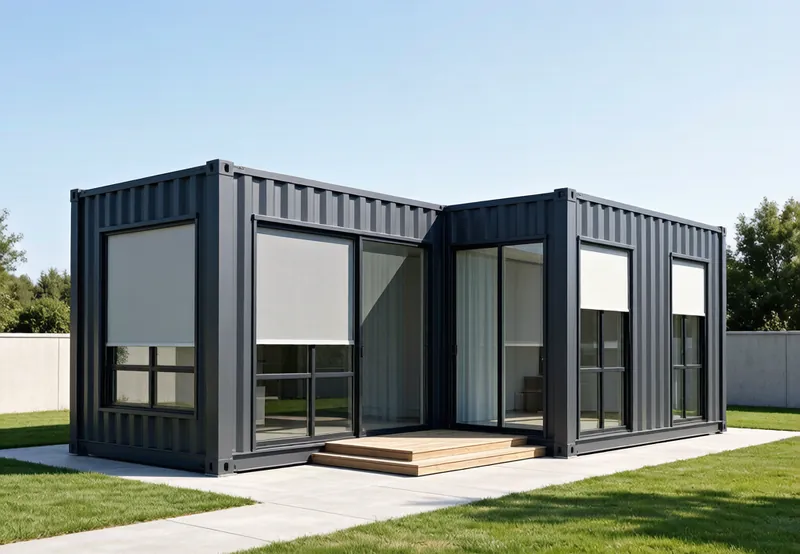
Quick Answer: Container House Price in UAE 2026
Container house prices in the UAE are $2,500–$12,000 landed to Jebel Ali in 2026. Factory prices from China: 20ft flat pack from $800, 20ft expandable from $2,500, and 40ft expandable from $4,500 (FOB). Add sea freight to Jebel Ali, Khalifa Port or Sharjah ($1,000–3,000 per 20ft unit) plus UAE import duty of 5% (free zones like JAFZA and Dubai South exempt) for the full landed cost. Dubai Municipality-compliant labor camp units ship from China in 4–5 weeks.
The UAE Container House Market in 2026
The United Arab Emirates is the Middle East’s most dynamic container housing market, growing at over 18% CAGR through 2032 and serving a construction sector that directly employs more than 500,000 workers in Dubai alone. A handful of converging forces make 2026 an exceptional year to build with container houses in the UAE.
First, a construction boom without precedent. Dubai’s real estate pipeline — including major residential masterplans, the expansion of DIFC and Business Bay, and mega-infrastructure projects — shows no sign of slowing, and Abu Dhabi’s urban expansion around Al Reem Island, Saadiyat Island, and the new industrial corridors continues at pace. Every one of these projects needs site offices, accommodation blocks, and temporary logistics facilities, delivered fast.
Second, the UAE Vision 2031 / “We the UAE 2031” agenda leans hard on industrial diversification, sustainable construction, and accelerated project delivery. Modular and prefabricated systems are explicitly supported as a faster, lower-carbon route to building stock, and free zones from JAFZA and Dubai South to Hamriyah actively court modular manufacturers and assemblers.
Third, the Expo legacy. Expo City Dubai and its surrounding District 2020 was built on swift, relocatable structures, and the demonstration effect has cascaded through the economy: developers, hoteliers, and event operators now accept high-quality modular buildings as the default rather than a compromise.
Fourth, tourism and the hospitality boom. The UAE welcomed record visitor numbers through 2024-2026, and the government’s tourism targets continue to rise. Desert glamping, beach resort rooms, safari-lodge pods, and farm-stay cabins across Dubai, Ras Al Khaimah, Liwa, and Fujairah are built largely from container and expandable units that hotels can deploy in weeks — not the 18-24 months a traditional building takes.
Finally, a structural labor-housing gap. With hundreds of thousands of migrant workers across construction, logistics, and services, Emirates-wide regulations mandate high-spec, air-conditioned, safe accommodation. Container dormitories are now the cost-effective standard for meeting those regulations: factory-welded, insulated, and deployed in quantity.
This guide is the complete buying playbook for the UAE market: market context, applications, factory and landed prices at each major Emirati port, the import and customs process, certification and building-code compliance, climate engineering, full labor-camp budgeting, investment math, supplier selection, and the questions UAE buyers ask us most.
Why Container Houses for the UAE?
| Benefit | Impact |
|---|---|
| Desert-Ready Engineering | 75mm PU insulation and ventilated roofs sized for 45-50°C summers |
| Rapid Deployment | Labor camps and site offices operational in 2-4 weeks, not months |
| Cost Efficiency | 70-95% savings vs traditional villa or hotel build; 30-50% vs local modular |
| Legally Recognized | Dubai Municipality Building Code and Abu Dhabi Building Code compliant |
| Labor Camp Scale | Certified worker accommodation in bulk quantities, regulation-compliant |
| Free Zone Advantage | Import via JAFZA, Dubai South, or Hamriyah at 0% customs duty |
| Modular Approval Path | Prefabricated structure classification simplifies municipal permitting |
| Relocatable | Move or re-sell units when a project, lease, or site changes |
| Glamping & Hospitality Grade | Resort finishes for desert, beach, and farm locations |
| Corrosion Protected | Anti-corrosion coatings for coastal humidity from Dubai to Fujairah |
UAE buyers choose container houses for one dominant reason: a fully functional, insulated, code-compliant building at roughly a third to a tenth of the cost of conventional construction, delivered in weeks. Flat pack models add a crucial desert advantage — they arrive as compact kits that load six to eight units per 40ft container, cut freight cost dramatically, and assemble on site with no welding and no crane, which keeps installation simple even for remote desert or industrial-zone plots.
Popular Applications in the UAE
| Application | Recommended Type | Location Examples |
|---|---|---|
| Construction Labor Camps | Flat Pack | Dubai South, Business Bay, Abu Dhabi island projects |
| Site Offices & Tool Stores | Flat Pack | Infrastructure, road, and utility works across the Emirates |
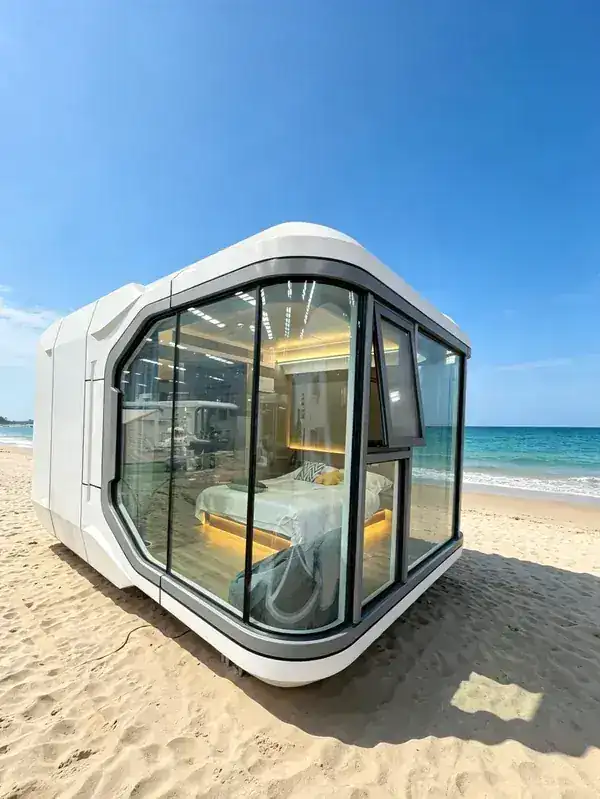
| Desert Glamping Resorts | Expandable / Space Capsule | Al Marmoom, Liwa Oasis, Al Qudra, RAK desert |
| Beach & Marine Resorts | Expandable / Space Capsule | Fujairah coast, Sharjah Khorfakkan, RAK beaches |
| Worker & Staff Accommodation | Flat Pack | Industrial zones, logistics parks, refinery & port staff |
| Equestrian Stables & Farms | Flat Pack | Al Ain, Dubai Livestock & Equestrian areas |
| Retail Kiosks & Pop-up Stores | Folding | Malls, festivals, Expo City events, Ramadan night markets |
| Warehousing & Storage | Flat Pack | Jebel Ali, Al Quoz, Sharjah industrial areas |
| Affordable & Emergency Housing | Folding / Flat Pack | Social housing, disaster response, labor spillover |
| Free Zone Facilities | Flat Pack / Expandable | JAFZA, Dubai South, Hamriyah, Jebel Ali Free Zone |
The two highest-velocity applications are labor camps and hospitality. Construction and infrastructure developers buy flat pack dormitories in quantities of 50-500+ units, and hotel developers buy expandable and space capsule units in batches of 20-100 for instant resort inventory. EPC contractors, meanwhile, standardize on flat pack site offices because they dismantle, re-deploy, and re-sell easily when a project winds down.
Container House Prices in the UAE (2026)
Prices below are consistent with the EasiHive global price system (2026): flat pack from $1,800, expandable from $4,500, folding from $2,000, space capsule from $4,000 for 20ft models. All factory prices are FOB (Ex-Works) from the China factory, including standard finishes and export packaging.
| Model | Factory Price (FOB) | Landed Jebel Ali (Dubai) | Landed Khalifa Port (Abu Dhabi) | Landed Sharjah |
|---|---|---|---|---|
| 20ft Flat Pack | $1,800–$2,500 | $2,800–$4,200 | $2,900–$4,300 | $2,700–$4,100 |
| 40ft Flat Pack | $3,200–$4,500 | $4,600–$6,600 | $4,700–$6,700 | $4,500–$6,500 |
| 20ft Folding | $2,000–$4,000 | $3,200–$6,000 | $3,300–$6,100 | $3,100–$5,900 |
| 20ft Expandable | $4,500–$6,000 | $6,300–$8,800 | $6,400–$8,900 | $6,200–$8,700 |
| 40ft Expandable | $8,000–$12,000 | $10,800–$16,300 | $10,900–$16,400 | $10,700–$16,200 |
| Space Capsule | $4,000–$15,000 | $6,400–$18,500 | $6,500–$18,700 | $6,300–$18,300 |
| Labor Camp Dormitory (bulk, per unit) | $1,300–$2,000 | $2,300–$3,700 | $2,400–$3,800 | $2,200–$3,600 |
Landed cost includes the factory price, ocean freight, port handling, customs clearance, and the 5% GCC import duty (0% if cleared through a free zone). Jebel Ali is the benchmark port: it receives the most frequent China sailings, and its volume keeps freight rates the lowest for Dubai-bound cargo. Khalifa Port in Abu Dhabi runs similar transit with marginally higher port handling. Sharjah’s Hamriyah Free Zone offers simplified free-zone clearance and is often the cheapest of the three for industrial-zone buyers, though it adds trucking if your final site is inside Dubai.
For bulk orders (10+ units), flat pack units load 6–8 per 40ft container, cutting per-unit freight by 40–60%. On a 200-worker labor camp, that single factor can save more than $120,000 versus shipping assembled units. See our Container House Cost Guide for the full cost breakdown and per-type shipping math.
Need exact landed pricing to your port and quantity? Request a quote and we will confirm the precise cost to Jebel Ali, Khalifa, or Sharjah.
Additional UAE Costs to Budget
| Item | Cost |
|---|---|
| GCC import duty (5% CIF, 0% in free zone) | Included in landed figures above |
| VAT (5%, reclaimable for registered businesses) | On CIF + duty value |
| Port handling / terminal charges | $150–$400 per 20ft unit |
| Customs clearance / broker fee | $100–$300 per shipment |
| Drayage (port to site) | $300–$800 across the Emirates |
| Foundation / concrete pad (per unit) | $500–$3,000 |
| Utility connections (electric, water, AC) | $1,500–$5,000 per unit |
| Municipality permit / deposit fees | Varies by emirate |
Shipping to the UAE
Main Ports
| Port | Emirate | Transit Time | Best For |
|---|---|---|---|
| Jebel Ali | Dubai | 3–4 weeks | Dubai sites, Dubai South, Business Bay, most frequent sailings |
| Khalifa Port | Abu Dhabi | 3–4 weeks | Abu Dhabi, Al Ain, western region projects |
| Sharjah / Hamriyah | Sharjah | 3–4 weeks | Industrial zones, free-zone importers, east-coast sites |
Shipping Cost (per 20ft unit)
| Type | Cost |
|---|---|
| Flat Pack | $600–$1,000 |
| Folding | $800–$1,300 |
| Expandable | $900–$1,500 |
| Space Capsule | $1,500–$2,500 |
Inland Transportation
UAE roads are excellent, and no site in the Emirates is more than a few hours from a major port. Last-mile delivery from Jebel Ali to project sites across Dubai and the Northern Emirates typically runs $300–$800 per unit depending on distance and whether a flatbed truck or lowbed trailer is needed. For 40ft units and space capsules, confirm the trucking company has lowbed capacity — standard flatbeds will not carry a 40ft box.
Port choice rule of thumb: if your site is in Dubai, clear at Jebel Ali. If the project is in Abu Dhabi or Al Ain, Khalifa Port minimizes trucking. Free-zone buyers on the east coast should compare Sharjah’s Hamriyah clearance against Jebel Ali + trucking — the simplified procedures often win.
Importing a Container House to the UAE
Importing container houses from China to the UAE is a routine, well-established process for any freight forwarder. Here is exactly how it works.
1. HS Code and GCC Duty Rates
The correct classification for a complete prefabricated building of iron or steel is HS 9406.90 under the GCC Harmonized System, which carries a 5% Common External Tariff on the CIF value. Related classifications include:
| HS Code | Description | GCC Duty |
|---|---|---|
| 9406.90 | Prefabricated buildings of iron/steel or other materials | 5% |
| 9406.10 | Prefabricated buildings of wood | 5% |
| 7308.90 | Steel structures and parts (if shipped as components) | 5% |
Most importers enter complete buildings under 9406.90. Some suppliers fragment shipments into Chapter 73 structural components, which rarely lowers the landed cost and can complicate municipal compliance documentation, so we recommend keeping the full-building classification. On a $5,000 CIF value, the duty bill is approximately $250.
2. Free Zone Import (0% Duty)
Importing through a UAE free zone such as JAFZA (Jebel Ali Free Zone), Dubai South, or Hamriyah defers or eliminates customs duty and VAT as long as goods remain within the zone. Two common strategies:
- Free-zone assembly: bring flat pack kits in, assemble, and deliver as a locally assembled product — common for labor-camp operators inside free zones.
- Duty-paid entry: clear goods into the mainland at 5% duty when units will be deployed outside the zone or sold to mainland customers.
Because modular housing is often deployed across mixed free-zone and mainland sites, most buyers choose duty-paid mainland entry for simplicity — the 5% is a small price for unrestricted deployment.
3. SABER and UAE Conformity Requirements
Container houses entering the UAE fall under the Emirates Conformity Assessment Scheme (ECAS / ESMA, now under MoIAT) for regulated building materials, plus Dubai Municipality / Municipality of Abu Dhabi building product approvals. Practical points for importers:
- ECAS/ESMA conformity: regulated products (electrical components, AC units, insulation materials, glazing) must carry ECAS registration or certificates from accredited bodies before sale on the mainland. Your supplier’s CE or ISO test reports accelerate this.
- SABER certification: if you re-export units onward into Saudi Arabia or other GCC markets — or distribute through a GCC-wide program — the goods may need SABER (Saudi) Product Conformity Certificates under the GCC-type approvals. For pure UAE delivery, SABER is not required, but EasiHive can supply the test reports, CE files, and ISO 9001/ISO 3834 weld-quality documentation you need for both routes.
- Gas and electrical: any gas appliances and electrical goods must be ECAS-certified; order fixtures with this in mind to avoid customs holds.
Important caveat: conformity navigation is fast when your supplier provides a complete documentation pack. Ask for CE/ISO reports, material certificates, and QC inspection records with every shipment. EasiHive provides all of these.
4. Customs Clearance Steps
- Shipment departs China with full export documentation (commercial invoice, packing list, bill of lading, certificate of origin).
- Vessel sails to Jebel Ali, Khalifa, or Sharjah over 3–4 weeks.
- Shipment arrives; the shipping line files the manifest with UAE customs.
- Your importer or broker submits the customs declaration (Bayane) with the invoice, packing list, and bill of lading.
- Duty (5%, or 0% in a free zone) is assessed and paid electronically.
- Customs clears the consignment; cargo is released to the terminal for pickup or direct trucking to your site.
5. Choosing Clearance Points
Clear at the port nearest your site to minimize trucking, or route through a free zone if you operate inside one. For first-time importers, a door-to-door (DDP) quote from your China supplier — where the supplier’s forwarder handles freight, clearance, duty, and delivery to your UAE address — removes most of the friction. EasiHive supports both DDP and EXW/FOB deliveries with full documentation for every shipment.
For the step-by-step version with production, QC, and payment timeline, see How to Import a Container House to the UAE.
Compliance and Building Standards
Container houses for the UAE must satisfy emirate-level building codes plus the federal conformity framework:
| Standard | What It Covers |
|---|---|
| Dubai Municipality Building Code | Building permits (1–5 year renewable), structural, fire, and occupancy compliance for Dubai |
| Abu Dhabi Building Code / UPC | Unified regulatory code for Abu Dhabi projects, structural and energy requirements |
| Civil Defense Fire Code | Fire-rated materials, escape routes, firefighting access — mandatory for camps and hospitality |
| GCC / Gulf Building Code alignment | Harmonized structural and construction standards across the six Gulf states |
| ECAS / ESMA (MoIAT) | Conformity for electrical, gas, insulation, and glazing products |
| Labor Accommodation Standards | Dubai’s and Abu Dhabi’s worker housing regulations (AC, density, sanitation, fire safety) |
EasiHive containers are engineered for GCC conditions — 75mm PU insulation as standard, fire-rated wall and roof panels, and materials selected for desert UV. We provide the full documentation package (CE/ISO reports, material certificates, structural calculations) that Dubai Municipality and Civil Defense review for building permits.
Dubai Municipality Permit Process
A container house gets its building permit through the standard Dubai Municipality pathway. Because prefabricated buildings are factory-certified, the process is typically faster than for stick-built construction:
- Submit the supplier’s structural drawings and material certificates with your application.
- Dubai Municipality reviews against the building code (structure, fire, insulation, ventilation).
- A permit is issued — renewable for 1–5 years depending on the deployment type (temporary site offices and camps permit renewal is straightforward).
- Civil Defense inspects fire safety for camps and commercial uses before occupancy.
For a labor camp, the permit also confirms compliance with Dubai’s worker accommodation standards — minimum area per worker, required number of AC units, sanitation, and fire escape provisions. EasiHive’s standard camp designs are laid out to satisfy these from first submission.
Climate-Specific Solutions by Emirate
The UAE combines two punishing conditions: summer temperatures that routinely exceed 45°C, and coastal humidity that accelerates corrosion. High-UV desert interiors and salt-laden coastal air demand different specifications, even within one Emirate:
| Region | Climate Challenge | Recommended Specification |
|---|---|---|
| Dubai (inland & urban) | Extreme summer heat, sand | 75mm PU, ventilated double-skin roof, high-capacity AC sizing |
| Dubai coast (JBR, Palm, Jumeirah) | Heat + salt-laden coastal humidity | 75mm PU, anti-corrosion coating, marine-grade fasteners |
| Abu Dhabi city & coast | Coastal humidity, intense UV | 75mm PU, anti-corrosion steel, UV-stable exterior cladding |
| Al Ain & western region | Desert interior, 47°C+, sandstorms | 75mm PU, enhanced door/window dust seals, dust-filtered AC intakes |
| Sharjah / Khorfakkan (east coast) | Humidity, occasional cyclonic rains | 75mm PU, waterproof membrane, corrosion treatment |
| Ras Al Khaimah (desert & coast) | Heat + high humidity | 75mm PU, anti-corrosion package, heavy-duty AC |
| Fujairah (east coast) | Highest humidity in the UAE | 100mm PU option, marine-grade corrosion protection |
| Liwa / Empty Quarter fringe | Extreme 50°C heat, blown sand | 100mm PU, full dust sealing, sand-flush roof drainage |
| Hatta / mountain areas | Hot summers, cooler nights, dusty | 75mm PU, condensation control, thermal-break window frames |
| Beach & resort sites everywhere | Salt spray, high UV, guests | 75mm PU, marine coating, resort-fit exterior cladding |
Ask for a site-specific engineering memo with your quote: EasiHive issues the thermal and humidity design calculations for your exact project location, which is what municipal reviewers and Civil Defense want to see in the permit jacket.
Desert Design Features
For UAE conditions, EasiHive recommends as standard:
- 75mm PU wall insulation minimum (vs 50mm for temperate climates); 100mm for the Empty Quarter fringe.
- Ventilated double-skin roof to shed solar heat gain before it enters the unit.
- Sand/dust seals on all doors and windows — the single most important detail for desert longevity.
- High-capacity AC units, BTU-sized for 45°C+ ambient, with dust-filtered intakes.
- Anti-corrosion coating for coastal and beach placements; marine-grade fasteners.
Labor Camp Solutions: Full Budget for 200 Workers
Dubai’s construction sector alone employs more than 500,000 workers, making regulated labor accommodation the largest container housing use case in the UAE. A 200-worker camp is the standard planning unit:
| Component | Specification | Quantity | Cost |
|---|---|---|---|
| Worker Dormitories | 20ft flat pack, 4 berths each | 50 units | $75,000 |
| Dining Hall | 40ft flat pack | 3 units | $24,000 |
| Kitchen | 20ft with commercial exhaust | 1 unit | $8,000 |
| Site / Camp Offices | 20ft flat pack | 3 units | $4,500 |
| Mosque / Prayer Room | 20ft flat pack | 1 unit | $4,000 |
| Laundry & Utility | 20ft flat pack | 3 units | $4,500 |
| First-aid / Storage | 20ft flat pack | 2 units | $3,000 |
| Shipping to Jebel Ali (bulk) | 6–8 units per 40ft container | — | $40,000 |
| Import duty (5%) + clearance | On landed value | — | $8,500 |
| Installation, AC, and site hookup | Labor, pads, connections | — | $20,000 |
| Total | 63 units + services | $191,500 |
Cost per worker: ~$960 all-in, delivered, installed, and air-conditioned.
At $1,000 per worker all-in, a container camp costs a fraction of the precast concrete alternative (typically $2,500–$4,000 per worker in the UAE), and it deploys in 6–10 weeks from order rather than the 6–12 months a permanent precast camp requires. The camp is also relocatable: at project completion, units can be re-sold or moved to the next site — a recapture value most permanent constructions never see.
Container vs. Traditional Construction: Investment Math
| Option | Cost per ft² (all-in) | Build Time | Notes |
|---|---|---|---|
| Traditional UAE villa | $250–$450 | 18–24 months | Labor, materials, and escalation costs are high in the Emirates |
| Precast concrete camp / building | $180–$300 | 6–12 months | Durable but slow and not relocatable |
| Local modular/prefab | $120–$220 | 3–6 months | Imported components, UAE assembly margins |
| Container house (flat pack) | $60–$110 | 2–4 weeks on site | Landed from China, bolted together, no crane needed |
| Container house (expandable) | $90–$150 | 4–8 weeks | Resort-grade finishes, 2–3× floor area on arrival |
Hotel and Glamping ROI Example
Consider a 30-pod desert glamping resort near Al Marmoom or Liwa:
| Item | Value |
|---|---|
| 30 space capsule / expandable pods, landed & installed | $240,000–$420,000 |
| Average nightly rate (2026 market) | $120–$250 |
| Occupancy (desert season, 70%) | ~255 nights/year |
| Revenue per pod per year | $30,600–$63,750 |
| Annual revenue (30 pods) | $918,000–$1,912,500 |
| Estimated payback on the build | 3–6 months of high season |
For comparison, a comparable fixed hotel structure would cost 5–10× more per room and take 18–30 months to open. The container route puts inventory in the market in one season — and because pods can be relocated, a resort can follow demand from the desert to the coast.
The honest caveat: a container house is a steel-framed, factory-built structure with a 20–30 year service life, not a century-grade legacy asset. Where it wins is initial cost, speed, relocatability, and cash flow — for camps, resorts, retail, and budget housing in the UAE, the payback math is rarely close.
Choosing a Container House Supplier for the UAE
Sourcing for the UAE is different from any other market: you need a China factory that understands Gulf compliance documentation, has shipped repeatedly to Jebel Ali, and knows how to engineer for 45°C heat, humidity, and blown sand — without you hand-holding from thousands of miles away.
Checklist for UAE Project Buyers, Hotel Developers, and EPC Contractors
- Real manufacturer, not a trader — visit or request a live video tour; ask for the factory’s business license, production-line photos, and weld/QC test records. See how to verify a China container house supplier.
- GCC documentation package — confirm the supplier provides CE/ISO reports, material certificates, and structural calculations that Dubai Municipality and Civil Defense will accept, not generic marketing sheets.
- Desert engineering depth — ask which insulation (75mm minimum), roof, and dust-sealing specs are standard, and whether they can issue a site-specific thermal memo for your Emirate.
- Labor camp track record — references for 50–500 unit camp deliveries and their knowledge of Dubai/Abu Dhabi worker-accommodation rules.
- Port and freight fluency — experience with Jebel Ali, Khalifa, and Hamriyah procedures; ask for past shipment references and their forwarder’s contact details.
- DDP vs FOB support — does the supplier’s forwarder handle door-to-door delivery to your site, or will you clear customs yourself?
- Bulk load efficiency — confirmed 6–8 flat pack units per 40ft container, which drives the per-unit freight 40–60% lower.
- Pre-shipment inspection — third-party inspection (SGS, Bureau Veritas) before the container is sealed.
- Spare parts and warranty — 5-year structural warranty plus a spare-parts kit shipped with your order.
- Payment terms — T/T against production-linked milestones, or escrow/letter of credit for large camp orders.
EasiHive is a China container house manufacturer shipping to the UAE with Dubai-compliant labor camp and glamping solutions, full conformity documentation, and a dedicated Gulf sales channel that coordinates Jebel Ali clearance and port delivery. Request a supplier quote.
FAQ
Are container houses legal in the UAE?
Yes. Container houses are recognized under the Dubai Municipality Building Code with renewable building permits (typically 1–5 years), and under the Abu Dhabi Building Code. Prefabricated structures follow a standard municipal approval path, and free zones from JAFZA to Dubai South and Hamriyah actively support modular facilities.
Are container houses fire-compliant in the UAE?
Yes, when built to spec. EasiHive units use fire-rated wall and roof panels and meet Civil Defense requirements for camps and commercial uses — including escape routes, firefighting access, and (for camps) per-block layout rules. Provide police/fire compliance details with your permit application; we supply the material certificates to support it.
Can container houses handle UAE desert heat?
Yes. With 75mm PU insulation, a ventilated double-skin roof, and properly sized air conditioning, interiors stay comfortable at 45°C+ ambient. For the Empty Quarter fringe (Liwa), we recommend the 100mm upgrade and full dust sealing. This is standard engineering for our Gulf-spec units — not an extra.
Do I pay import duties on container houses into the UAE?
Yes, on the mainland: 5% GCC Common External Tariff on CIF value under HS 9406.90 (prefabricated buildings), plus 5% VAT (reclaimable for VAT-registered businesses). Importing through a free zone such as JAFZA, Dubai South, or Hamriyah defers or eliminates duty while goods remain inside the zone.
Can I import through a free zone to avoid duties?
Yes. Clear through JAFZA, Dubai South, or Hamriyah and you pay no customs duty or VAT while goods are in-zone. When you deploy on the mainland, duty-paid entry applies — at 5% on a $5,000 unit that is about $250, a small price for unrestricted deployment.
Is financing available for container houses in the UAE?
For commercial buyers, yes: developers and camp operators typically fund container builds through project finance, supplier credit against production milestones, or asset financing on the deployed units. Personal mortgage financing for container homes is uncommon in the UAE (mortgage lending targets on-plot permanent structures), so most private buyers purchase units outright or through business leases. Resale value is generally strong because units are relocatable and in demand across construction and hospitality.
How long does shipping to the UAE take, and what is the total timeline?
Shipping from China to Jebel Ali, Khalifa, or Sharjah takes 3–4 weeks. Production takes 15–25 days for a container load, so plan roughly 7–10 weeks from order to arrival at port. Camp or resort installation on site typically runs 2–4 weeks after arrival — call it 2.5–3.5 months from purchase order to occupancy.
How long does assembly take on site?
A 20ft flat pack assembles in about a day with 2–4 workers and a small forklift — no welding, no crane. An expandable unit opens in a day plus finishing. A 200-worker camp of 63 units installs in 2–4 weeks including foundations, AC, and utility hookup.
Can I relocate or resell a container house in the UAE?
Yes. Units can be craned onto a truck and moved to a new site, which is why camps and resorts treat them as reusable assets. At project end, used units in good condition hold strong resale value in the UAE market — especially labor-camp and glamping stock, which is in recurring demand. There is an active secondary market for code-compliant container units in Dubai and Abu Dhabi.
Do I need a local agent or importer of record to buy?
Not for customs — your freight forwarder acts as your clearing agent and any licensed UAE company can act as importer of record. A local agent adds value mainly for permits: a Dubai-based consultant or contractor who files your Dubai Municipality application, coordinates Civil Defense inspection, and handles site works. Many buyers engage one for the permit phase only, then operate independently.
Get a Quote for the UAE
Contact EasiHive for factory-direct pricing to the UAE. We:
- Engineer to Dubai Municipality and Abu Dhabi Building Code requirements with Gulf-spec desert engineering
- Ship to Jebel Ali, Khalifa Port, and Sharjah/Hamriyah with full clearance documentation
- Provide DDP delivery options so your units arrive site-ready without customs friction
- Supply labor-camp layouts that satisfy worker-accommodation regulations
- Deliver resort-grade glamping, beach, and hospitality configurations in volume
- Support everything from single site offices to 200-500 worker camps and 30-100 pod resorts
Send your emirate, unit type and quantity, and we will return a line-item landed-cost quote for your port within one business day.
Related Guides
- Container Houses in Saudi Arabia
- Container Houses in Qatar
- Container Houses in Oman
- Container Houses in Bahrain
- Container Houses in Kuwait
- How to Import a Container House to the UAE
- Container House Cost Guide 2026
- Container House Buying Guide
- Container House Comparison
- Labor Camp Dormitory Procurement Guide
- China Flat Pack Container House Manufacturer Guide