Quick Answer: How Much Does a Container House in Australia Cost?
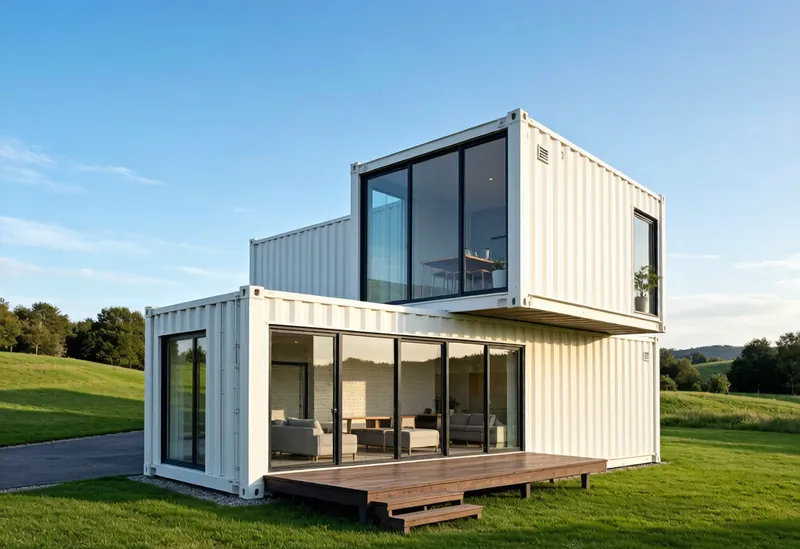
A container house in Australia costs $2,800–$5,200 landed for a 20ft flat pack (US$1,800 FOB China), rising to $6,000–$9,800 for a 20ft expandable. Landed to Sydney/Brisbane is $2,800–$4,800; Melbourne/Perth is $3,000–$5,200, after sea freight and 10% GST. Container homes are popular as granny flats, mining-camp accommodation, and off-grid builds. Units ship from China in 12–18 days.
Container Houses in Australia
Australia has quietly become one of the world’s largest and most demanding markets for container housing. The demand is not a passing trend — it is structural, driven by three forces that make prefabricated, relocatable housing uniquely valuable here.
First, the mining industry. Resource giants operate across the Pilbara iron ore belt and the Bowen Basin coal fields, where thousands of fly-in-fly-out (FIFO) and drive-in-drive-out (DIDO) workers need accommodation at sites that are hours from the nearest town and often in climate extremes. Container housing is the industry-standard answer — it is factory-built to a consistent quality, ships economically in volume, and can be relocated the moment a pit, shaft, or haul-road changes location.
Second, an acute housing crisis. Australia has one of the least affordable housing markets in the OECD. Median house prices have outpaced wage growth for two decades, and the shortfall of housing — particularly in Sydney, Melbourne, and Brisbane — is measured in the hundreds of thousands of dwellings. Buyers priced out of the traditional market, plus investors, are turning to container homes as a fast, achievable path onto the property ladder, whether as a primary residence, a backyard granny flat, or a rental.
Third, remote and regional demand. From Queensland’s flood-prone interior to Western Australia’s outback stations and New South Wales’ coastal towns, container houses offer something the conventional building industry increasingly cannot: speed, predictability, and relocatability. When a builder is booked out for 12-18 months, a container home that lands assembled in weeks is not a compromise — it is the pragmatic choice.
Add to this Australia’s rigorous building regime — the National Construction Code (NCC) and a dense layer of Australian Standards — and you have a market where competent, code-compliant manufacturers who understand local conditions are worth their weight in gold. This guide is the complete, practical buying manual for container houses in Australia, from pricing and import to certification, climate engineering, mining camp configuration, and supplier vetting.
Why Choose Container Houses in Australia?
| Benefit | Impact for Australian Buyers |
|---|---|
| Rapid Deployment | Live-in condition in weeks, not the 12-18 months typical of tradie build queues |
| Remote Suitability | Engineered for outback heat, cyclone cyclones, bushfire zones, and fly-in sites |
| Cost Efficiency | 40-60% below traditional construction; a fraction of a granny-flat build |
| Relocatable | Unit can be trucked and re-erected when your project, lease, or mining site moves |
| AS Compliant | Designed and certified to AS 1170, AS/NZS 4600, and the NCC |
| Factory Quality | Consistent, ISO 9001-manufactured panels produced under controlled conditions |
| Scalable & Modular | Add units over time — a single granny flat can grow into a 50-unit camp |
| Tax / Accounting Friendly | Depreciable, leaseable, and movable capital equipment for business use |
For FIFO miners, farmers, developers, and first-home buyers alike, the combination of speed, cost, flexibility, and compliance is difficult to match with any other building method.
Popular Applications in Australia
| Application | Recommended Type | Location Examples |
|---|---|---|
| Mining Camps | Flat Pack | Pilbara (WA), Bowen Basin (QLD), Hunter Valley (NSW) |
| Remote Worker Housing | Flat Pack | Gas fields, wind farms, transmission lines across remote NT/WA/QLD |
| Farm Stay / Accommodation | Expandable / Space Capsule | Rural QLD & NSW grazing properties |
| Granny Flat / Secondary Dwelling | Expandable | Suburban backyards in Sydney, Melbourne, Brisbane, Perth |
| Site Office & Worker Camp | Flat Pack | Urban construction sites, metro infrastructure projects |
| Glamping / Eco Resort | Space Capsule | Coastal NSW, Byron Bay, tropical QLD tourism |
| Bushfire-Rebuild Housing | Flat Pack | Fire-affected zones across VIC, NSW, SA |
| Disaster / Flood Relief | Folding | Flood-prone Queensland towns |
| Off-Grid Retreat / Cabin | Expandable | NSW Southern Highlands, TAS, WA’s southwest |
| Rental / Airbnb Income Suite | Expandable | Tourism locations, coastal towns, winery districts |
Whatever your application, selecting the correct model type up front — flat pack versus expandable versus space capsule — materially affects shipping efficiency, installation time, and finished footprint. We cover that trade-off in the pricing section next.
Container House Prices in Australia
All prices below are factory-direct from EasiHive and are consistent with our global container house price guide. “Total landed cost” adds factory inspection, export packaging, ocean freight, and estimated duties/GST to a major port.
| Model | Factory Price (FOB) | Landed to Sydney / Brisbane | Landed to Melbourne / Perth |
|---|---|---|---|
| 20ft Flat Pack | From $1,800 | $2,800-4,800 | $3,000-5,200 |
| 20ft Expandable | From $4,500 | $6,000-9,500 | $6,300-9,800 |
| 20ft Folding | From $2,000 | $3,200-5,500 | $3,400-5,800 |
| 20ft Space Capsule | From $4,000 | $5,800-9,000 | $6,200-9,500 |
| 40ft Expandable | From $8,000 | $11,000-16,000 | $11,500-16,500 |
| Labor Camp Dormitory (bulk) | From $1,000 | +$400-700 freight/unit | +$500-800 freight/unit |
Pricing notes:
- Flat pack ships 6-8 units per 40ft container, so the per-unit freight cost is the lowest of any model — the most economical choice for camps and bulk projects.
- Expandable units arrive as a compact closed box and unfold on site in under an hour, giving a full-width living space without a heavy-lift crane in most cases.
- Folding units balance built-in finishing with excellent container-load efficiency — ideal for emergency and fast-turnaround housing.
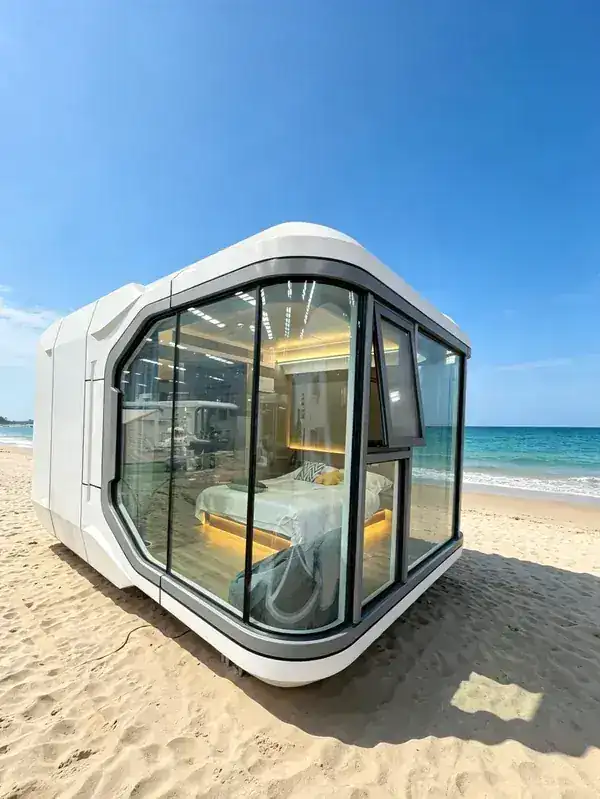
- Space capsule models are shipped pre-finished as a single unit (one per container) — the premium choice for glamping and high-value tourism where appearance sells.
Landed cost drivers to remember — duties/GST (see the import section below), inland trucking from the port to your site, and your chosen insulation/certification specification. A site 500 km inland in the Pilbara will carry noticeably higher last-mile logistics than a Sydney suburb. We always confirm your exact port, quantity, and spec with a formal quotation.
Importing & Shipping to Australia
Importing container houses from China to Australia is a well-trodden and cost-effective path, delivering 30-50% savings over local modular builders. Here is the practical playbook.
Main Ports and Transit Times
| Port | State | Transit Time | Notes |
|---|---|---|---|
| Sydney | NSW | 18-22 days | Largest container gateway, SE Australia |
| Brisbane | QLD | 16-20 days | Fast gateway for QLD mining & SE delivery |
| Melbourne | VIC | 20-24 days | Gateway for VIC & Tasmania |
| Fremantle | WA | 22-26 days | Nearest port for Pilbara mining supply |
| Adelaide | SA | 22-26 days | Gateway for SA & central Australia |
Shipping Costs (per 20ft unit)
| Type | Cost |
|---|---|
| Flat Pack | $400-700 |
| Expandable | $700-1,000 |
| Space Capsule | $1,200-1,800 |
Because flat pack units load 6-8 per 40ft container, bulk camp orders make per-unit freight remarkably low. Add $200-1,500 for inland trucking depending on distance from the port to your site.
Duties and GST (10%)
Australia applies a 10% Goods and Services Tax (GST) on the landed value of imported goods, along with customs duty assessed under the Harmonized System. Container houses typically fall under HS Code 9406 (prefabricated buildings). Key points for buyers:
- Customs duty is generally low (often 0-5%) but varies by product composition and the country of origin. A Certificate of Origin may qualify you for preferential rates under Australia’s free trade agreements (including the China-Australia FTA, ChAFTA), which can reduce or eliminate duty on eligible goods.
- GST of 10% applies on top of the duty-inclusive landed value for most commercial imports. GST is not generally input-taxed for your personal home, so factor it into your all-in budget.
- Anti-dumping (AD) and countervailing duties — product-specific measures that can apply to certain steel products. Using a transparent supplier who can document material sourcing and origin helps you avoid AD-class goods that would attract additional duty.
Customs Clearance Steps
- Engage a licensed customs broker — they lodge your entry and handle duty/GST assessment.
- Provide documentation: commercial invoice, packing list, bill of lading, certificate of origin, and (where applicable) the supplier’s export/import permit.
- Lodge the import declaration (usually via the Integrated Cargo System) and pay assessed duty and GST.
- Quarantine inspection — AQIS/Biosecurity may inspect timber, packaging, and lockers. Confirm your supplier uses ISPM 15-heat-treated or fumigated timber and clean, pest-free packing to avoid delays or treatment orders.
- Release and inland delivery — clear the unit from the container terminal and truck it to site.
Fumigation requirement: Because container houses ship with timber components and framing, Australian biosecurity requires them to be free of quarantine pests and, in many cases, to arrive with fumigation certificates and ISPM 15-compliant timber. A reputable export manufacturer handles this automatically — ask for proof before you sign.
Choosing Ports for AD-Class Goods
If you are importing steel products that could be subject to anti-dumping measures, choosing your port and documenting origin matters. All major east and west coast ports (Sydney, Melbourne, Brisbane, Fremantle) use the same national customs framework, so the port does not change duty — what changes is transit time and inland logistics. The real protection is a supplier that supplies a clear Certificate of Origin and material test certificates so your broker can claim the correct (usually 0-5%) rate and confirm no AD exposure.
Australian Standards & Building Compliance
Container houses for Australia must satisfy the National Construction Code (NCC) and relevant Australian Standards. This is the non-negotiable foundation of a safe, insurable, code-compliant build.
| Standard | What It Covers |
|---|---|
| AS 1170.0 | General structural design actions principles |
| AS 1170.1 | Permanent, imposed, and other live actions |
| AS 1170.2 | Wind actions — critical for coastal, cyclone, and outback sites |
| AS 1170.4 | Earthquake actions (seismic design) |
| AS/NZS 4600 | Cold-formed steel structures — the design basis for container modules |
| NCC / NCC 2022 | National Construction Code — the legal building framework referenced by state law |
| State Building Acts | Local permits and approvals (below) |
EasiHive containers are designed to meet AS 1170 and AS/NZS 4600 requirements. We provide structural engineering certificates and documentation packages suitable for building permit applications.
State-by-State Permit Differences
| State | Building Permit | Typical Council Cost | Notes |
|---|---|---|---|
| NSW | Yes | $500-2,000 | SEPP/Housing legislation allows secondary dwellings |
| VIC | Yes | $500-1,500 | Part of broader granny-flat reforms |
| QLD | Yes | $500-1,500 | Streamlined for relocatable homes in some areas |
| WA | Yes | $500-2,000 | Mining camps often use special remote approvals |
| SA | Yes | $400-1,200 | Permit under Development Act |
| TAS | Yes | $400-1,200 | Generally faster process |
| NT | Yes | Varies | Remote/industrial approvals common |
Permit requirements and costs vary within each state by local council. State governments have progressively relaxed rules for secondary dwellings (granny flats) to ease the housing shortage, making well-documented container homes easier to approve than ever. We provide engineering drawings and documentation to make your application straightforward.
Bushfire Zones (BAL)
Large parts of VIC, NSW, SA, and WA are mapped into Bushfire Attack Level (BAL) zones. In a BAL-12.5 to BAL-40 zone you will need fire-rated cladding, non-combustible fixings, and appropriate ember protection. Confirm your site’s BAL rating early — it affects materials, certification, and insurance, and a compliant container supplier should be able to specify the correct bushfire build-up.
Climate-Zone Solutions for Australia
Australia’s climate runs from the tropical Top End to Tasmania’s cold south, and your insulation and HVAC specification must match the site.
| Region | Climate Challenge | Recommended Specification |
|---|---|---|
| Darwin / Top End (NT) | Tropical, humid, monsoonal rain | 50mm PU, elevated foundation, enhanced cross-ventilation |
| Pilbara / Kimberley (WA) | Extreme heat (50°C+), intense sun | 75mm PU, reflective/coated roof, high-efficiency AC prep |
| Central Australia (Alice Springs) | Arid, huge diurnal swings | 75mm PU, sun-shading, robust thermal mass flooring |
| Brisbane / SE QLD | Humid subtropical, summer storms | 50-75mm PU, strong ventilation, cyclone-rated wind |
| Sydney (NSW) | Temperate, humid summers | 50mm PU standard |
| Perth (WA) | Mediterranean, hot dry summers | 50-75mm PU, reflective roof |
| Melbourne / VIC | Variable, cool winters | 75mm PU recommended, double glazing |
| Tasmania / Snowy regions | Cold winters, frost, wind | 100mm PU, triple glazing, insulated floors |
| Coastal cyclone belts (N QLD) | Cyclonic winds, torrential rain | Cyclone-rated connections (N3 wind region), raised build |
| Bushfire-prone rural areas | Fire risk, remote access | BAL-rated cladding, non-combustible details |
Choosing insulation and glazing for the actual site climate — rather than a one-size default — is the difference between a comfortable home and an energy-hungry one. Your EasiHive spec sheet should be tailored to the region above.
Mining Camp Solutions (200-Worker Example)
Australia’s mining sector is the single largest consumer of container housing in the world, and the standards are exacting. Below is a realistic, fully budgeted 200-worker camp based on EasiHive bulk supply to a remote WA/QLD site.
| Component | Quantity | Unit Cost | Total |
|---|---|---|---|
| Worker Dormitories (4-bed flat pack) | 50 units | $1,500 | $75,000 |
| Supervisor Quarters (expandable) | 10 units | $4,000 | $40,000 |
| Dining Hall (40ft) | 2 units | $8,000 | $16,000 |
| Site Offices | 4 units | $1,500 | $6,000 |
| Medical / Support / Rec (flat pack) | 13 units | $1,900 | $25,000 |
| Shipping to WA/QLD port | 79 units | — | $35,000 |
| Inland logistics (site) | — | — | $25,000 |
| Foundation + Installation | — | — | $25,000 |
| Utilities & hook-ups | — | — | $30,000 |
| Total | 79 units | — | $277,000 |
Cost per worker: approximately $1,385 (or under $1,150 per worker for the accommodation-only scope excluding utilities).
Remote-Site Logistics
Delivering to a Pilbara or Bowen Basin site is not the same as shipping to a city suburb. Plan for:
- Last-mile trucking over sealed, gravel, and unsealed roads — confirm axle loads and route access.
- Site prep ahead of delivery — levelled pads, footings, and crane access.
- Crane hire for expandable and space capsule units (flat packs typically assemble with a forklift or light crane).
- Crew rotation for multi-week builds — FIFO installers are often required.
- Inventory buffer — allow 2-3 weeks of schedule slack for weather, permits, and road closures in the wet season.
A supplier with genuine mining-camp export experience de-risks all of this. We coordinate shipping, documentation, and installation guidance end-to-end.
Container Housing vs Traditional Building: The Australian Cost Case
| Comparison | Container Home | Traditional Build | Granny Flat Build |
|---|---|---|---|
| Unit/house shell | $1,800-9,000 landed | $3,500-7,000/m² build | $1,800-3,000/m² |
| Build timeline | 6-10 weeks | 12-18+ months (trade queue) | 4-9 months |
| Movable | Yes (relocatable) | No | No |
| Permit complexity | Moderate (well-documented) | High | Moderate |
| Typical all-in (20ft) | $15,000-35,000 | $60,000-150,000+ | $50,000-150,000 |
Across all states — NSW, VIC, QLD, WA, SA, TAS, NT — container homes deliver a far lower entry cost than equivalent traditional builds. For rental yield, a modest container granny flat in a capital city can generate $1,000-2,500/month in rent, with an all-in cost well below a conventional build — often returning 20-40% of the outlay in annual rent before operating costs. For business owners, a container home also offers depreciation and lease advantages as movable fixtures rather than attached property.
Choosing a Container House Supplier for Australia
Sourcing for Australia requires a manufacturer that genuinely understands Australian conditions — AS 1170 wind loading, cyclone and bushfire zones, mining-camp standards, and biosecurity/fumigation export rules. A China factory-direct supplier delivers 20-40% savings over local modular builders, but you must verify credentials before ordering.
What to Look For
- AS 1170 / AS/NZS 4600 compliance — Australian wind, seismic, and cold-formed steel design
- Mining-camp track record — remote-site delivery experience, not just catalogue claims
- Cyclone / bushfire capability — BAL and N3/N4 wind-region options
- Export & biosecurity readiness — fumigation certificates, ISPM 15 timber, clean packing
- ISO 9001 certification — an audited quality management system
- Reference projects — 3+ completed projects in Australia or comparable markets
- Engineering certificates — a documentation package you can hand to your council and insurer
EasiHive is a China container house manufacturer shipping to Australia with AS-compliant units, mining-camp experience, and full export documentation. Request a supplier quote for factory-direct pricing to your port.
FAQ
Are container houses legal in Australia?
Yes. Container houses are legal when they comply with the National Construction Code and relevant Australian Standards, with a building permit from your local council.
Do container houses meet Australian building standards?
Yes. Our containers are designed to meet AS 1170 (structural, wind, and seismic) and AS/NZS 4600. We provide engineering certificates for permit and insurance applications.
How long does shipping to Australia take?
From China, 16-26 days depending on port (16-20 days to Brisbane, 18-22 to Sydney, 22-26 to Fremantle/Adelaide), plus inland trucking to your site.
How long does assembly take?
A flat pack container house assembles in 2-4 hours with a small crew; expandable units open in under an hour; a full 200-worker camp complete with utilities is live in roughly 8-10 weeks from order.
Can I get a building permit for a container house?
Yes. You submit engineering drawings and specifications to your local council. We provide the full documentation package.
Are container houses suitable for Australian climate?
Yes, with the right insulation. We recommend 75mm PU for hot regions (WA, NT) and cold regions (VIC, TAS), 100mm PU for Tasmania/Snowy zones, and cyclone-rated construction for tropical QLD.
Do container houses meet mining camp compliance?
Yes, when properly designed and documented. Confirm AS 1170 structural compliance and any state resource-authority requirements for your site; we support this documentation.
What import duties and taxes apply?
Australia applies 10% GST on landed value plus customs duty (typically 0-5% under HS 9406). A Certificate of Origin can qualify preferential rates under ChAFTA. Factor both into your all-in budget.
Can I finance or insure a container house?
Many Australian buyers finance container homes through personal, business, or construction loans, and insurers cover them when code-compliant and permitted. We provide the certificates lenders and insurers want.
What is the resale / relocatability value?
Relocatable container homes retain strong resale appeal and can be moved to a new site — a genuine advantage over fixed builds when land or projects change.
Get a Quote for Australia
Contact EasiHive for pricing to Australia. We:
- Comply with AS 1170 and AS/NZS 4600 standards
- Provide engineering certificates for permits and insurance
- Ship to Sydney, Melbourne, Brisbane, Perth, Adelaide, and beyond
- Offer cyclone and bushfire-rated configurations
- Support mining camps, granny flats, farm stays, and commercial projects
- Provide on-site installation guidance and remote-site logistics
Tell us your quantity, model type, destination port, and site climate — we will return a precise, landed-cost quotation.