Quick Answer: How Much Can a Storage Container Hold?
A 20ft shipping container holds about 33 m³ (roughly 1,150 cu ft) on a 14.8 m² floor, while a 40ft container holds about 67 m³ (roughly 2,370 cu ft) on a 29.7 m² floor. A 40ft high-cube adds a little more headroom, at about 76 m³. For most businesses a single 20ft unit replaces a large shed or a lock-up garage — and unlike a building, it can be delivered, stacked and moved again when the site changes.
Why Containers Make Excellent Storage
Containers were designed to protect cargo through ocean crossings, so as storage they are:
- Weather-tight — welded steel with sealed doors keeps rain, dust and pests out far better than a timber shed.
- Secure — steel walls and a lockable latch resist break-ins that defeat tents and thin-clad stores.
- Stackable — corner castings let units stack vertically, so you store upward without buying more land.
- Movable — a crane or reach-stacker relocates a unit in minutes; no demolition and no re-permitting.
- Cheap per cubic metre — a used container is one of the lowest-cost secure volumes you can buy.
That combination is why construction sites, farms, depots, retailers and events companies all use them as a ready-made warehouse.
Container Sizes and Capacity
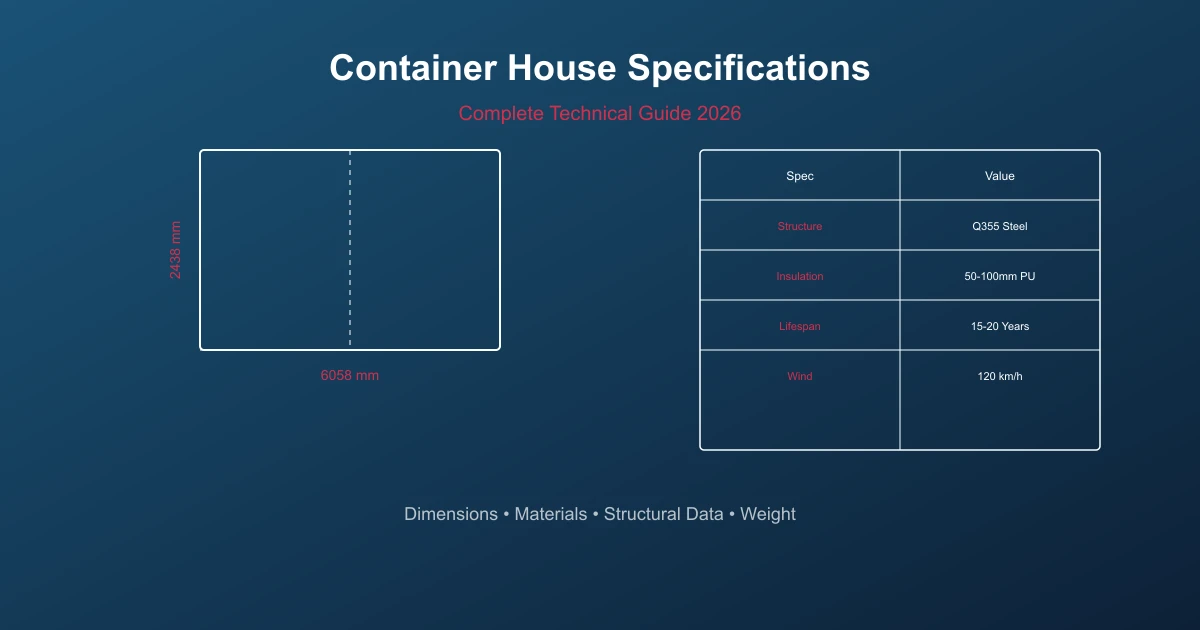
| Size | Internal length × width × height | Floor area | Volume | Typical payload |
|---|---|---|---|---|
| 20ft standard | ~5.90 × 2.35 × 2.39 m | ~14.8 m² | ~33 m³ | ~28,000 kg |
| 40ft standard | ~12.03 × 2.35 × 2.39 m | ~29.7 m² | ~67 m³ | ~26,500 kg |
| 40ft high-cube | ~12.03 × 2.35 × 2.69 m | ~29.7 m² | ~76 m³ | ~26,000 kg |
Two planning points people miss: usable volume is lower than the figures above once you add shelving and aisle space (expect 60–70% usable), and the door opening — not the internal width — is what limits what you can load. A standard 20ft door opening is roughly 2.34 m wide × 2.28 m high, so anything wider will not go in even if it would fit inside.
Common Storage Use Cases
- Construction site storage — tools, formwork, fixings, PPE and plant accessories locked on site, avoiding repeated trips to a depot.
- Equipment lockup — secure machines, generators and vehicle parts, often paired with a small workshop fit-out.
- Inventory hub — buffer stock held close to where it is used, reducing transport and lead time.
- Pop-up warehouse — seasonal or overflow stock without signing a multi-year industrial lease.
- Archive and records — weather-tight document storage with optional shelving and pest control.
- Retail and events — mobile stock rooms, ticket offices and secure back-of-house.
- Cold or climate-sensitive stock — possible with insulation and active cooling, though this raises cost and power needs (see climate section).
Site Layout and Stacking
A little planning at delivery saves a lot of frustration later:
- Stack 2-high as standard; 3-high with engineering. Containers are designed to bear load through their four corner castings, so stacking is safe when the base is level, the corners align, and twist-locks or stacking cones are used. Never let a unit rest on its roof panels.
- Leave aisle access. If you will open the doors regularly, keep 2.5–3 m of clear space in front of each door and consider opposing rows with a central aisle.
- Plan door orientation. Point doors away from prevailing weather so rain does not sit on the seals, and avoid facing doors into strong sun if you store heat-sensitive goods.
- Use vertical space inside. Pallet racking or heavy-duty shelving turns 33 m³ into a genuine small warehouse rather than a pile of boxes.
- Add a canopy or lean-to. A simple roof between stacked units creates a covered loading area and keeps the doors usable in rain.
- Keep the base drained. A level, well-drained pad of compacted hardcore or concrete avoids water pooling under the unit and rusting the floor.
Security: Locks, Lighting and Access Control
Steel walls do most of the work, but the door is the weak point if you only use the factory handle:
- Fit a lockbox (shrouded padlock) over the door latch so the hasp cannot be cut.
- Add internal locking bars on high-value stores.
- Light the approach with motion-activated floodlights and, on remote sites, a camera or alarm.
- Control keys and codes — record who holds access, especially on shared sites.
- Position units in sight of a site office or a neighbouring occupied building where possible.
Climate Control and Condensation
Condensation, not rain, is the usual cause of damp stock in a steel container. Warm moist air meets a cold steel wall or roof overnight and water forms inside.
- Ventilate. Passive vents or a small extractor keep air moving and reduce the dew-point gap.
- Use desiccants. Silica or calcium-chloride packs absorb moisture in sealed stores.
- Insulate for sensitive goods. Lining the roof and walls with insulation stops the cold surface that causes condensation.
- Dehumidify where humidity is consistently high or goods are moisture-sensitive.
- Raise stock off the floor. Pallets or dunnage let air circulate and keep goods clear of any surface water.
- Ventilate after loading — closing a container full of damp equipment guarantees condensation.
For genuinely temperature-sensitive stock, a refrigerated or insulated container is the correct tool; a standard box with a household dehumidifier will struggle in hot, humid climates.
Cost Reality: What Storage Containers Cost
| Option | Typical cost | Notes |
|---|---|---|
| Used 20ft (wind/water tight) | ~$1,500–3,000 | Cheapest secure volume; inspect for rust and floor damage |
| New 20ft (one-trip) | ~$3,000–5,500 | Best seals and lifespan; strong resale value |
| Used 40ft | ~$2,500–4,500 | More volume per dollar than 20ft |
| New 40ft high-cube | ~$5,000–8,000 | Maximum volume, best condition |
| Modified (doors, shelving, lighting, insulation) | +$1,000–8,000 | Cost depends on fit-out level |
A used container is often the cheapest secure storage you can buy, and it holds its value — if you no longer need it, it can usually be sold or relocated rather than written off like a shed.
Buying vs Renting Storage Containers
- Buy if you need storage for more than about 6–9 months, want to modify the unit (shelving, insulation, power), or value the resale value.
- Rent for short projects, one-off events or when you cannot commit to a site long term. Rental is cheaper month-to-month but never builds an asset.
- Hybrid — rent for a short peak, then buy once the need proves permanent — is common on construction projects.
Storage Container Checklist Before You Buy
- Confirm the internal dimensions and door opening against your largest item.
- Check the floor (wood or steel) and inspect for soft spots or rust.
- Verify wind and water tightness — look for daylight at the seals and check the roof.
- Decide stacking now: buy units with sound corner castings if you plan to stack.
- Plan access: pad, drainage, aisle width and door orientation.
- Budget for locks, lighting and shelving, not just the box.
- Confirm delivery access — a 20ft unit needs a truck with a crane or a reach-stacker on a firm approach.
FAQ
How much fits in a storage container?
A 20ft holds about 33 m³ (roughly 1,150 cu ft) and a 40ft about 67 m³ (roughly 2,370 cu ft). Allow for shelving and aisles: expect to use 60–70% of that volume for accessible storage.
Can I stack storage containers?
Yes — normally 2-high, and 3-high or more with an engineered base and proper corner-casting support. Load must always pass through the four corner castings, never through the roof or side panels, and twist-locks or stacking cones should secure each layer.
Will my goods get damp inside a container?
A sealed steel box can suffer condensation, which is the usual cause of damp stock. Ventilate the unit, use desiccants, raise goods off the floor on pallets, and insulate or dehumidify for moisture-sensitive items.
Is a container secure enough for tools and equipment?
Very. Welded steel walls plus a lockbox over the latch defeat most break-in attempts that succeed against sheds and tents. Add internal locking bars, lighting and CCTV for high-value or remote sites.
Should I buy new or used for storage?
Used is the cheapest route to secure volume and is fine if the unit is wind and water tight. Buy new (one-trip) if you need the best seals, the longest lifespan or strong resale value, or if the container will double as a habitable or climate-controlled space.
Can I use a container as a cold store?
Only with the right fit-out. Standard boxes need insulation and active cooling to hold temperature, and power supply and running costs must be planned. For genuine cold storage, a refrigerated container is the correct starting point.
Do I need a foundation for a storage container?
Usually no full foundation is required — a level, drained pad of compacted hardcore, concrete blocks or a small concrete slab is enough. A proper base matters more if you plan to stack or to store heavy plant.
Is a container cheaper than building a shed?
For equivalent secure, weather-tight volume, almost always yes. A used container is typically cheaper per cubic metre than a comparable shed, can be stacked, and can be sold or moved on when the site changes.
Can a cargo container be used as a storage container home?
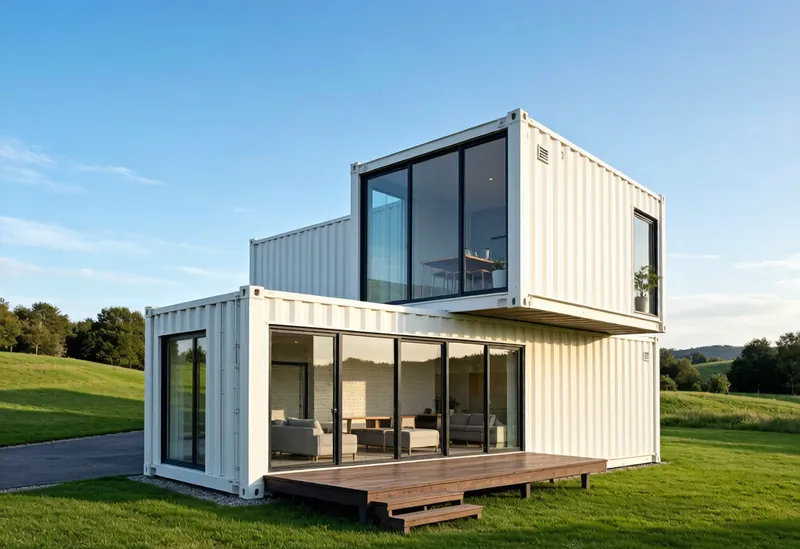
Yes. A cargo container built for freight doubles as a compact storage container home or workshop once it is insulated, glazed, and fitted with a proper door. Many buyers convert a single cargo container into a garden studio, site office, or weekend retreat, then add more units later as the need grows.