Modular vs Container House in 2026
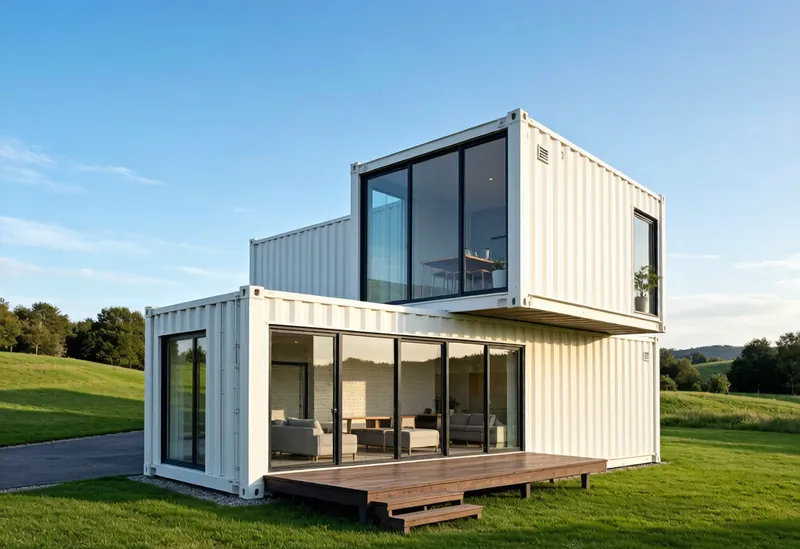
Both are “factory-built” homes, but they are very different structures. A container house starts from a steel shipping container; a modular home is built in a factory to the same codes as a site-built house, then assembled on a foundation. This guide compares them so you pick the right one.
How They’re Built
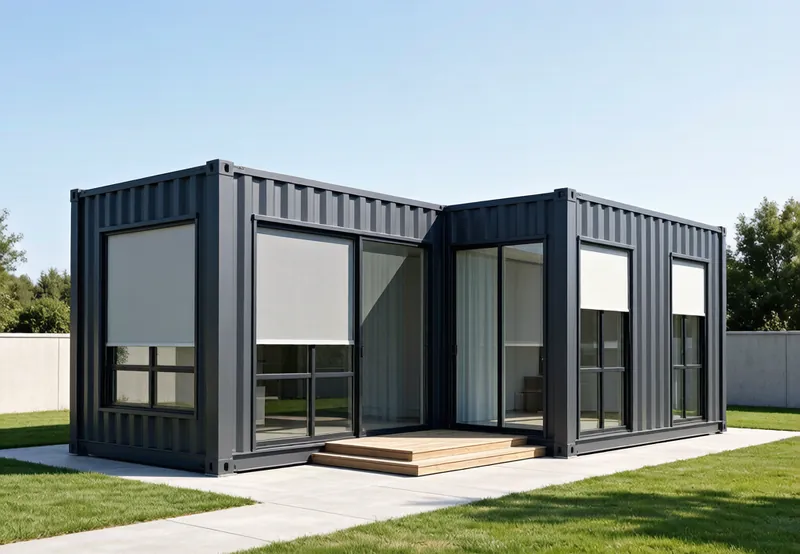
- Container house: one or more ISO containers, cut, insulated, and fitted out. Width is fixed at ~2.44 m (8 ft).
- Modular home: volumetric modules built on a steel or timber frame to local building code, joined on site into a conventional-looking house with standard room dimensions.
Side-by-Side Comparison
| Factor | Container House | Modular Home |
|---|---|---|
| Upfront cost | Lower entry point | Higher, but code-compliant |
| Build speed | Fast (shell in days) | Fast (factory + quick assembly) |
| Interior width | Fixed ~2.35 m internal | Flexible, standard rooms |
| Customization | Limited by container size | High (any floor plan) |
| Insulation & comfort | Needs careful detailing | Built to code by default |
| Permits | Varies; sometimes tricky | Usually straightforward |
| Lifespan | 20–40+ yrs with care | 50+ yrs like site-built |
| Resale | Niche market | Broader market |
| Transport | Standard container logistics | Oversize module moves |
When to Choose a Container House
- You want the lowest entry cost and a distinctive industrial look.
- Your site is remote and container logistics are easy.
- You need a small unit (office, studio, sleepout, cabin).
- You’re comfortable managing insulation and condensation carefully.
When to Choose a Modular Home
- You want a full-size family home with normal rooms.
- Permits and resale value matter.
- You need code-compliant insulation, fire separation, and finishes from day one.
- You want a conventional floor plan without steel-width constraints.
Can You Combine Them?
Yes — many projects use containers for ancillary spaces (garage, studio, rental unit) and modular for the main house. This hybrid gets low cost where it helps and comfort where it counts.
Cost Reality Check
- Container shell DIY: from a few thousand dollars; finished small unit $25k–$60k.
- Modular: typically $100k–$250k+ for a complete home, but turnkey and code-approved.
- Containers win on small/budget builds; modular wins on large/permanent homes.
Cost per Square Metre, Not Cost per Unit
Comparing headline prices misleads, because the two products are usually bought at different sizes. Normalised to finished floor area:
| Scenario | Usable area | Typical all-in | Cost per m² |
|---|---|---|---|
| Container studio | ~14 m² | $30k–$60k | ~$2,100–$4,300 |
| Container 40ft, one bed | ~28 m² | $55k–$110k | ~$2,000–$3,900 |
| Modular small unit | ~30 m² | $70k–$130k | ~$2,300–$4,300 |
| Custom modular, two bed | ~85 m² | $180k–$350k | ~$2,100–$4,100 |
The interesting result is that the two converge at the upper end. Containers win decisively in the smallest size bands, where modular’s fixed engineering, transport, and compliance costs cannot be spread across enough floor area.
Foundation and Site Work Compared
| Factor | Container | Modular |
|---|---|---|
| Transport | Standard container logistics, simple permits | Oversize loads, escorts, route surveys |
| Lifting | Small crane or telehandler suffices | Large crane with an engineered lift plan |
| Foundation | Piers, screw piles, or slab | Full engineered footing or slab |
| Site access | Often fits where modular cannot | Needs road width and turning radii |
| Assembly time on site | Days to a couple of weeks | Weeks, plus finishing trades |
On a tight urban site, or a remote plot reached by a narrow road, the container’s logistics advantage can be worth more than any difference in the structure itself.
What Each Choice Costs You Later
| Lifecycle factor | Container | Modular |
|---|---|---|
| Insulation and comfort | Must be detailed deliberately | Built to code by default |
| Insurance and appraisal | Needs documentation to satisfy underwriters | Familiar to lenders and insurers |
| Resale market | Niche but growing | Broad and conventional |
| Relocation | Genuinely movable as a unit | Rarely economic to move |
| Later design changes | Constrained by the steel grid | Floor plans can be reconfigured |
A Simple Decision Framework
Choose a container when the unit is small, the budget is tight, the site is remote or awkward, and you accept the need to engineer insulation properly. Choose modular when you need conventional room sizes, straightforward finance and insurance, and long-term resale to a mainstream buyer. And remember the hybrid: containers for the studio, garage, or rental unit alongside a modular or site-built main house often delivers the best of both at a lower total cost than either alone.
FAQ
Is a modular home cheaper than a container home?
For a small unit, a container is usually cheaper. For a full family home, modular can be cost-competitive once you factor in container modification, insulation, and compliance work.
Which lasts longer?
Modular homes are built to the same lifespan as site-built houses (50+ years). Container homes last 20–40+ years with good maintenance and rust protection.
Are container homes harder to permit?
Sometimes — some jurisdictions lack a clear path for container structures. Modular homes follow established residential codes, so permits are usually smoother.
Which is faster to build?
Both are fast versus site-built. A container shell can be ready in days; modular arrives largely finished and is assembled in weeks.