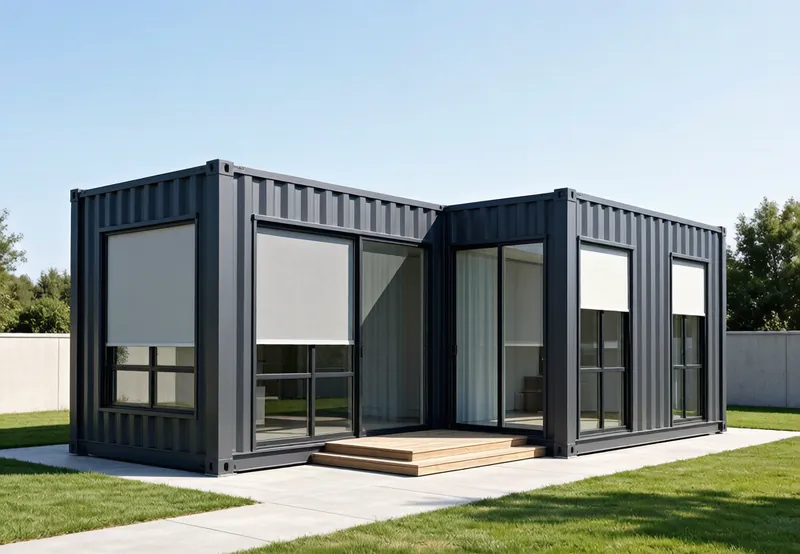
What Is a Container Office?
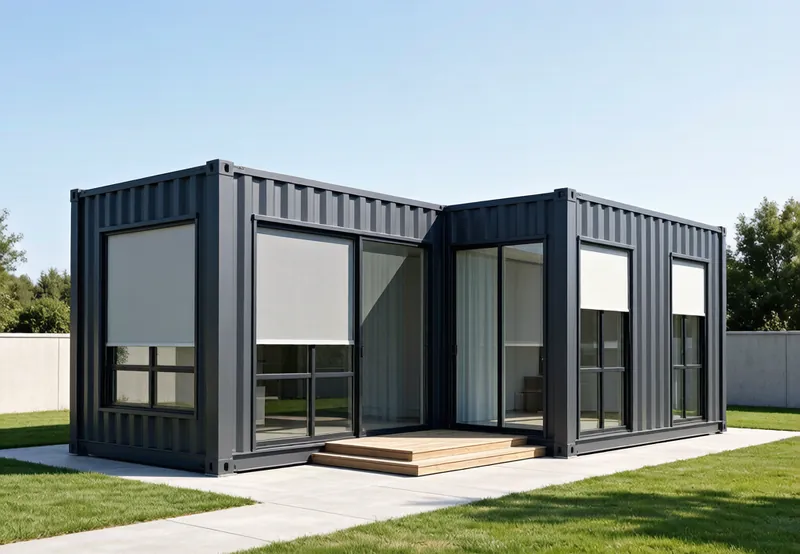
A container office is a prefabricated workspace built from (or styled as) a shipping container module — insulated, glazed, electrically wired, and fitted out for people to work in. They range from a single 20ft flat pack unit serving two to three staff, up to multi-unit, two-storey office complexes with meeting rooms, reception, and amenities.
The core appeal is speed and mobility: a unit is built in a factory, shipped to site, and operational in days rather than the months a conventional build requires. That makes container offices the default choice for anyone who needs workspace where fixed construction is slow, expensive, or temporary.
Container Office Types
| Type | Footprint | Best For | Price (USD) |
|---|---|---|---|
| Flat pack office (20ft) | ~14 m² | 2–3 staff, site offices | $1,800–$2,800 |
| Flat pack office (40ft) | ~28 m² | 4–6 staff, open plan | $3,200–$4,800 |
| Expandable office (40ft) | ~37 m² | Instant open-plan office | $8,000–$12,000 |
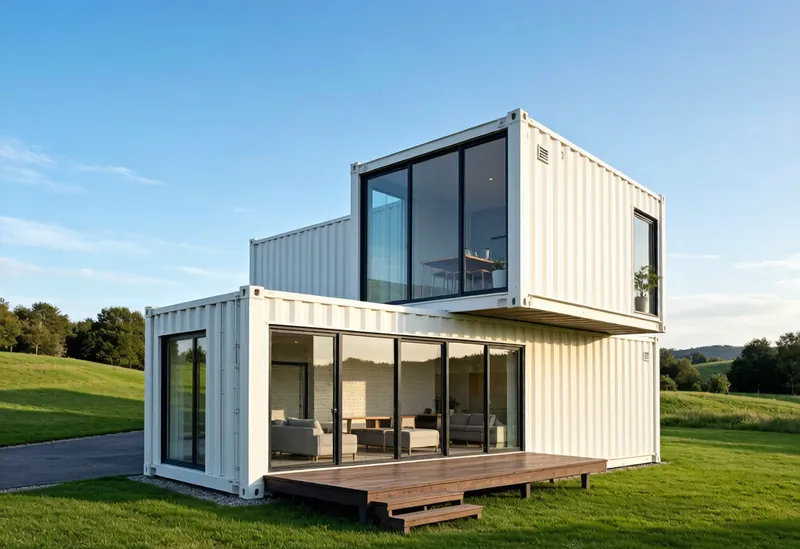
| 2-storey office stack | 56–112 m² | Site HQ, admin blocks | $15,000–$40,000 |
| Office + storage combo | ~28 m² | Trades, remote depots | $3,800–$6,000 |
| Meeting / reception pod | ~14 m² | Client-facing front desk | $2,400–$4,500 |
Prices are FOB / Ex-Works from the China factory. Landed cost depends on freight, import duty, and VAT in your country — see the Container House Cost Guide for the per-market breakdown.
Standard Specifications
A work-ready container office is more than a metal box. Expect:
- Structure — corten steel frame, typically 50–75mm PU or rock-wool sandwich panels for walls and roof
- Glazing — double-glazed aluminium windows, often with a glass-fronted entry for client-facing units
- Flooring — PVC or composite wood, rated for foot traffic
- Electrical — pre-wired lighting, power outlets, distribution board, optional AC provision
- HVAC — split-unit AC cutouts or pre-installed units; ventilation for humid climates
- Network — conduits for data cabling, optional pre-fitted CAT6
- Doors — insulated steel door plus fire-rated options for certain jurisdictions
For hot or cold climates, specify insulation thickness and HVAC capacity up front — retrofitting is awkward and costly once the unit is sealed.
Use Cases
Construction & Industrial Sites
The classic application. Site offices manage permits, payroll, and meetings on location. Stack two units for a site HQ with a meeting room above.
Sales & Showrooms
A glazed flat pack unit becomes a sales office or showroom at a development, a car yard, or a retail park. It is branded, relocated, and reused across campaigns.
Remote & Field Operations
Mining, agriculture, infrastructure, and energy projects use container offices where no built infrastructure exists. They ship compactly and deploy fast.
Events & Pop-up
Festivals, expos, and temporary administrations use container offices as ticket points, command centers, and staff rooms.
Disaster Response & Relief
Emergency coordination offices, medical admin, and relief logistics hubs — deployable within days of a event.
Container Office vs Other Options
| Option | Build Time | Relocatable | Cost per m² (USD) | Lifespan |
|---|---|---|---|---|
| Container office (flat pack) | Days–weeks | Yes | $130–260 | 15–20 yrs |
| Traditional build | Months | No | $200–600+ | 30+ yrs |
| Leased portable cabin | Days | Yes | Monthly rent | N/A |
| Prefab light-steel building | Weeks | Partly | $180–400 | 20+ yrs |
Container offices win on speed, relocatability, and reuse. They rarely win on lowest cost per square metre for a permanent, single-site office — but the ability to move the asset to the next project changes the lifetime economics.
Setup & Permits
Setup follows the same path as any container building:
- Foundation — pad footings, piers, or a concrete strip; level the unit before connection
- Placement — crane or forklift; multi-unit layouts need a connection plan
- Services — power (grid or solar), water, data, and drainage
- Approval — most jurisdictions treat a single office as a temporary structure, but check local rules; see Container House Permits for the general principle
A single flat pack office typically takes a small crew half a day to place and connect. A two-storey complex needs engineering for the stack and foundations.
Buying Checklist
Before you order, lock down:
- Headcount — how many people, and do you need meeting/private space?
- Duration — permanent, multi-year, or short campaign? (Drives spec and finish)
- Climate — insulation, HVAC, and corrosion treatment for coastal or extreme sites
- Power — grid connection, generator, or solar/off-grid
- Mobility — will it move? Frame and fit-out for repeated handling if so
- Compliance — local structural and electrical code; request certified drawings
- Landed budget — unit price is a fraction of all-in; budget freight, duty, VAT, foundation, and installation
Get a Container Office Quote
For a line-item quote, contact EasiHive with headcount, intended use, site country and access, required spec (glazing, HVAC, electrical), and whether you need certified drawings for submission. We supply factory-direct pricing, climate-rated specifications, and shipping worldwide.
FAQ
How much does a container office cost?
A 20ft flat pack office starts around $1,800 FOB. A 40ft unit runs $3,200–4,800, an expandable office $8,000–12,000, and a two-storey complex $15,000–40,000. Landed cost adds freight, duty, and VAT — see the Cost Guide for per-market detail.
Are container offices cheaper than building?
Per square metre for a permanent single site, conventional construction can be cheaper. Container offices win on speed, relocatability, and reuse — the unit is an asset you move to the next project rather than abandon.
Can a container office be used as a permanent office?
Yes. With correct foundation, insulation, HVAC, and certified electrical work, a container office serves as a permanent workspace for 15–20 years, often longer with maintenance.
Do I need a permit for a container office?
It depends on jurisdiction and duration. Many treat a single temporary office as permitted development; permanent or multi-unit installations usually require approval. Check local rules before installation.
How fast can a container office be operational?
A single flat pack unit is typically placed and connected within a day by a small crew. Factory production runs 15–25 days, plus shipping. Multi-unit complexes take longer to assemble but not proportionally.