Container House Price in Canada in 2026
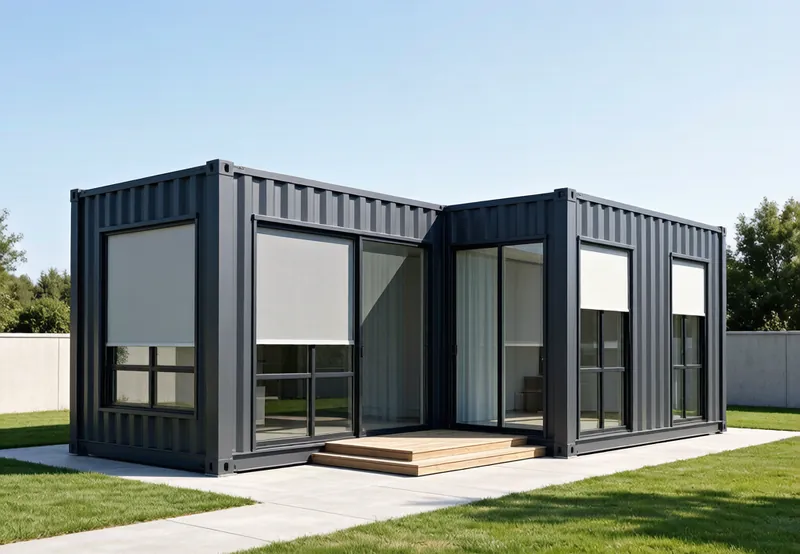
Canada is a strong but specification-heavy container market. Harsh winters, remote resource sites, and a chronic shortage of affordable and seasonal housing make factory-built units attractive — but only when they are engineered for Canadian cold. Conventional low-rise construction typically runs CAD 2,200–4,000 per square metre, against which a properly specified container unit can land 20–40% cheaper.
This guide covers the real 2026 numbers in both US dollars and Canadian dollars (CAD): the factory price, the landed cost after duty and GST, the Arctic-grade insulation that Canadian winters demand, foundation and installation, and the bulk economics behind remote work camps and cottages.
Container House Prices by Type (2026)
| Type | 20ft Price (USD) | 20ft Price (CAD) | 40ft Price (USD) | 40ft Price (CAD) |
|---|---|---|---|---|
| Flat Pack | $1,800–$2,500 | CAD 2,470–3,430 | $3,200–$4,500 | CAD 4,390–6,170 |
| Expandable | $4,500–$6,000 | CAD 6,170–8,230 | $8,000–$12,000 | CAD 10,970–16,460 |
| Folding | $2,000–$4,000 | CAD 2,740–5,490 | – | – |
| Space Capsule | $4,000–$15,000 | CAD 5,490–20,570 | – | – |
Exchange rate note: The Canadian dollar floats and is typically around CAD 1.37–1.40 = US$1. Your CAD budget moves with the exchange rate, so lock pricing or hedge on large orders. All unit prices above are FOB / Ex-Works from the China factory, before freight, duty, and GST.
Total Landed Cost Calculator for Canada
The factory price is only the starting point. Here is the full breakdown for a standard 20ft flat pack unit delivered and installed near a major city.
| Item | Cost (USD) | Cost (CAD) | Notes |
|---|---|---|---|
| Unit (20ft flat pack) | $1,800–$2,500 | CAD 2,470–3,430 | Standard spec |
| Ocean freight (China → Vancouver) | $600–$1,200 | CAD 820–1,650 | Rail to Toronto/Montreal adds cost |
| Import duty (0–8% MFN on prefab) | $0–$200 | CAD 0–270 | Classification dependent |
| GST (5%) | $120–$210 | CAD 170–290 | Applied to CIF + duty |
| Port handling & customs clearance | $250–$500 | CAD 340–690 | Terminal charges, broker fees |
| Inland freight (Vancouver → site) | $400–$1,200 | CAD 550–1,650 | Cross-country rail is costly |
| Foundation (frost-protected slab/piers) | $1,200–$3,000 | CAD 1,650–4,120 | Frost depth drives design |
| Installation labor (3–4 workers) | $500–$1,000 | CAD 690–1,370 | 2–4 hours for flat pack |
| Crane / forklift | $250–$550 | CAD 340–750 | Often avoidable with flat pack |
| Utility connections | $1,500–$4,500 | CAD 2,060–6,180 | Power, water, septic common |
| Permits & inspection | $500–$2,000 | CAD 690–2,740 | Municipal + ESA electrical |
| Total Landed Cost | $7,100–$16,400 | CAD 9,800–22,500 | Per 20ft unit |
Key insight: The all-in cost runs 4–7× the factory price, the widest multiplier of any market here, because Canadian projects add long inland freight and heavy foundation and insulation requirements. Budget the landed number, never the factory number.
Cost by Region
| Region | Foundation Cost | Installation Cost | Approval Complexity |
|---|---|---|---|
| Vancouver / BC | CAD 2,500–5,500 | CAD 1,400–2,600 | Medium (seismic + BCBC) |
| Toronto / Ontario | CAD 2,800–6,000 | CAD 1,500–2,800 | Medium-High (Ontario SB-1) |
| Montreal / Quebec | CAD 2,500–5,500 | CAD 1,400–2,600 | Medium (National Building Code) |
| Alberta / Prairies | CAD 2,200–5,000 | CAD 1,300–2,500 | Medium |
| Remote North | CAD 4,000–9,000 | CAD 2,000–4,000 | High (access, climate) |
Two factors dominate: frost depth (foundations must extend below the freeze line, often 1.2–2.0 m) and snow/ wind loads, which drive both structure and insulation thickness.
How to Stay Within Budget
1. Ship flat pack, and consolidate rail freight Flat pack units pack 6–8 units per 40HQ container. Freight to Vancouver is $600–1,200; cross-Canada rail to Toronto or Montreal adds $400–1,200 per unit for a single unit, but consolidating 25+ units cuts per-unit freight sharply. This is the largest lever for Canadian projects.
2. Specify for the climate zone — and only that Canada needs Arctic-grade insulation (R-28 to R-40 walls, R-50+ roof), heat-trace plumbing, triple-glazed windows, and slab-on-grade or pier foundations sized for frost depth. Specify the rating your zone requires; over-insulating a mild-coast site wastes budget.
3. Budget the foundation before you order Foundation is commonly 25–40% of total project cost and is the most underestimated line. Confirm frost depth and snow load for your site before committing to a slab budget.
4. Confirm the approval pathway early Container dwellings follow the National Building Code (NBC) adopted provincially (BCBC, Ontario SB-1, Quebec), with municipal permits and ESA electrical inspection. Confirming whether your unit is a dwelling, ADU, or temporary accommodation before you order avoids a delivered unit that cannot be occupied.
Work Camp & Cottage Bulk Economics
Remote accommodation is the dominant container application in Canada, and it is where the economics are most compelling.
| Component | Configuration | Indicative Cost (USD) |
|---|---|---|
| Dormitory units (4 bunks each) | 20ft flat pack, Arctic-grade | $2,000–$2,800 per unit |
| Washroom / shower units | 20ft, pre-plumbed, heat-traced | $2,600–$3,500 per unit |
| Camp kitchen / canteen units | 2–3 linked units | $6,800–$11,000 per block |
| Laundry + storage unit | 20ft flat pack | $1,900–$3,200 |
| Site office / gatehouse | 20ft flat pack | $1,900–$3,200 |
| Freight (consolidated, 25+ units) | Rail + final truck | $350–$750 per unit |
| Foundation, utilities, installation | Site-wide | $100–$320 per m² of camp |
At scale, the per-bed cost of a container work camp typically lands 30–50% below a conventionally built equivalent, and the camp becomes operational in weeks — critical for oil sands, mining, and remote infrastructure programmes.
Container House vs Traditional Construction in Canada
| Option | Cost per m² (CAD) | Build Time | Lifespan |
|---|---|---|---|
| Traditional low-rise (wood/ICF) | CAD 2,200–4,000 | 6–12 months | 30+ years |
| Prefab / modular home | CAD 1,800–3,200 | 2–4 months | 25+ years |
| Container house (flat pack, landed) | CAD 1,700–3,500 | 2–4 weeks | 15–20 years |
| Container house (expandable, finished) | CAD 2,600–4,500 | 4–8 weeks | 20–30 years |
Container construction typically lands 20–40% below conventional building on a per-square-metre basis for a single unit, and the gap widens on bulk orders. The trade-offs are a shorter design life and NBC/ municipal approval. For work camps, cottages, ADUs, and site offices, the advantage is decisive.
Get a Canada Price Quote
For an exact, line-item quote, contact EasiHive with:
- Your province and site access details (metro, rural, or remote north)
- Number of units and container type (flat pack, expandable, folding, space capsule)
- Application (work camp, cottage, ADU, site office)
- Climate requirements (frost depth, snow load, Arctic-grade insulation)
- Whether you require engineering documentation for permit submission
We provide factory-direct pricing, Canadian-climate specifications, and shipping to Vancouver, Toronto, Montreal, and Calgary.
FAQ
How much does a container house cost in Canada?
A 20ft flat pack unit costs CAD 9,800–22,500 ($7,100–16,400) fully landed and installed near a major city. The factory price starts at CAD 2,470 ($1,800), but freight, duty, 5% GST, heavy foundation, and Arctic-grade insulation bring the all-in figure to roughly 4–7× the factory price. Remote sites cost more.
What import duty and GST apply to a container house in Canada?
Prefabricated buildings are typically subject to 0–8% MFN duty depending on classification, plus 5% GST on the imported value (CIF + duty). Provincial sales tax generally does not apply at import, but municipal permit and inspection fees apply at the building stage. Confirm the HS code with your broker.
Are container houses legal in Canada?
Yes, when built to the National Building Code as adopted by the province (BCBC, Ontario SB-1, etc.) and permitted by the municipality, with ESA electrical inspection. Requirements vary by province and by whether the unit is a dwelling, ADU, or temporary accommodation.
Can container houses handle Canadian winters?
Yes, when specified correctly. Canadian deployments need Arctic-grade insulation (R-28–R-40 walls, R-50+ roof), heat-traced plumbing, triple-glazed windows, and frost-protected foundations. Standard tropical specs are not adequate for sustained -30°C to -40°C conditions.
How fast can a container work camp be deployed in Canada?
Production typically takes 15–25 days, sea freight from China to Vancouver adds roughly 14–25 days, and cross-country rail plus assembly adds more. Order-to-occupancy is commonly 10–16 weeks, against 6–12 months for a comparable site-built facility.